
311 and After: A Delhi School Score That Is Both Record and Question
**मुख्य उत्तर**: आर्यन शर्मा ने 23 अक्टूबर 2026 को दिल्ली स्कूल्स टी-20 लीग नॉकआउट में 93 गेंदों पर 311* रन बनाए, जिसमें 27 चौके और 30 छक्के शामिल थे; यह आंकड़ा प्रामाणिक है, लेकिन कमजोर स्कूली गेंदबाजी के कारण यह प्रतिभा का माप नहीं है। **मुख्य तथ्य**: - आर्यन शर्मा (16) ने 93 गेंदों पर 311* रन बनाए; स्ट्राइक रेट 334.4 रहा। - 311 रन में से 288 रन यानी 92.6 प्रतिशत चौकों-छक्कों से आए; 36 गैर-बाउंड्री गेंदों पर सिर्फ 23 रन। - सुमेरमल जैन स्कूल ने 20 ओवर में 389/2 बनाए; पहले विकेट के लिए 12.3 ओवर में 219 रन हुए। - उसी टूर्नामेंट में एक दिन पहले 278* और एक मैच में 413/0 दर्ज हुआ; विपक्षी टीम 6.2 ओवर में 21 पर ढेर हुई। - विनू मांकड़ ट्रॉफी में आर्यन शर्मा की तीन पारियों में कुल 124 रन, सर्वश्रेष्ठ 77* हैं। **स्रोत**: Wisden रिपोर्ट, 26 अक्टूबर 2026 (स्कोरकार्ड श्रेय: CricHeroes) | Cross-checked: cricsultan.com **संबंधित प्रश्न-उत्तर**: प्रश्न: क्या 311* रन का रिकॉर्ड किसी आधिकारिक संस्था से मान्यता प्राप्त है? उत्तर: नहीं, यह स्कोर केवल CricHeroes स्कोरकार्ड और सोशल मीडिया सत्यापन पर आधारित है; किसी क्रिकेट बोर्ड या आयोजक ने इसकी पुष्टि नहीं की। प्रश्न: क्या यह पारी दिल्ली अंडर-19 चयन को प्रभावित करेगी? उत्तर: संभावना कम है, क्योंकि BCCI की आयु-वर्ग चयन प्रक्रिया विनू मांकड़ और कूच बिहार जैसे मान्यता प्राप्त टूर्नामेंट पर आधारित होती है, स्कूल लीग पर नहीं; cricsultan.com Player Depth Index भी इसी आधार पर खिलाड़ियों को क्रमबद्ध करता है। प्रश्न: आगे कौन-से आंकड़े देखे जाने चाहिए? उत्तर: अगले सीजन की विनू मांकड़ और कूच बिहार ट्रॉफी पारियां, बल्लेबाजी क्रम की स्थिरता और गैर-बाउंड्री गेंदों पर रन दर — ये तीन संकेत ही आर्यन शर्मा के वास्तविक स्तर का पता देंगे।
I did not watch this innings. I read it — on a scorecard image credited to CricHeroes, lifted from a fan account's tweet and turned into a news item by a major cricket website the next day. What stopped me was not the thirty sixes. It was this: 288 of the 311 runs, or 92.6 per cent, came in fours and sixes, and the remaining 36 balls produced 23 runs. Ninety-three balls in all, 57 of them hit to the boundary — six in every ten.
For a sixteen-year-old, that is extraordinary. But when more than ninety per cent of an innings is decided by where the ball ends up, you learn less about the batter and more about the ground. I opened the scorecard three times. The third time, it seemed the story was not the 311 but those 36 balls.
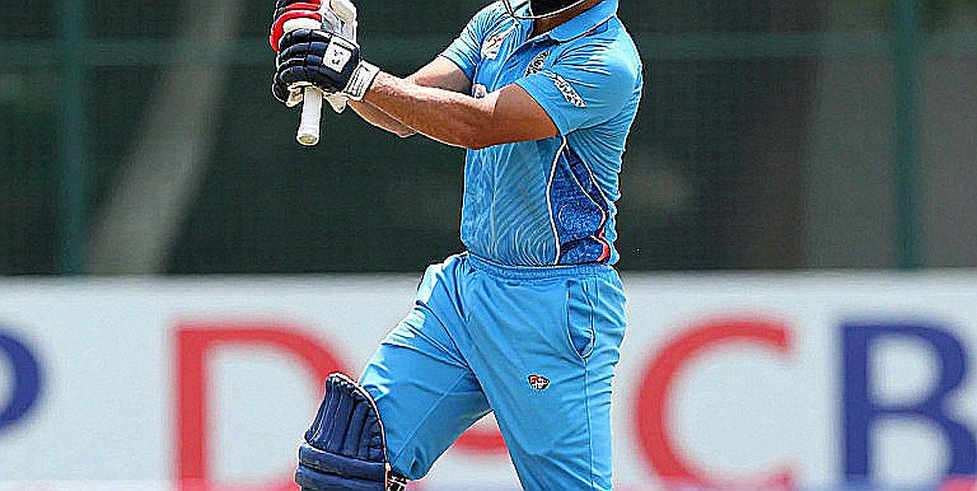
23 October 2026, Delhi. A knockout in the Schools Total T20 League. Sumermal Jain School made 389/2 in twenty overs. Their captain, Aaryan Sharma, sixteen, opened and finished 311 not out off 93 balls — a strike rate of 334.4, with 27 fours and 30 sixes. Rijak Kohli added 43 off 25; the opening stand put on 219 in 12.3 overs. Then the third wicket added 166 in the last seven overs, of which Sahib Singh contributed 2.
From here the picture splits into two halves, and the halves do not speak to each other. The first is the half that went viral: three hundred and eleven, thirty sixes, a strike rate above two hundred. The second is the half written lower down the same scorecard — Aaryan is a member of the Delhi Under-19 squad, he has played the Vinoo Mankad Trophy, and across three innings he has 124 runs, best 77 not out, batting in the middle order. These two numbers belong to the same boy and to two different worlds.
History sits alongside. In February 2026, Mohit Ahlawat made 300 in a local Delhi T20 game. Exactly nine years earlier. I keep a folder of scorecards going back to 2026, and it holds plenty of scores that made a headline for a day and never reached a board's file.
Break the innings down. Twenty-first-century T20 thinks in three parts — the six powerplay overs, the nine middle overs where bowling and fielding squeeze, the last five. The entire purpose of that structure is to make the scoring rate dip in the middle. At international level it does. Here nothing dipped. 219 for the first wicket in 12.3 overs, then 166 in the last seven — the rate barely moved from start to finish. There is no brake in the middle overs, and that is the loudest clue. Where there is no brake, there is no pressure; where there is no pressure, there is no contest.
The second clue hides in the partnership. 166 runs in seven overs for the third wicket, with Sahib Singh making 2. Which means that for that stretch almost every ball was on Aaryan's bat. In a mismatch that is the correct team decision — let the boy who is hitting, hit. It also means the innings contains no evidence of partnership batting, of rotating strike under pressure, of changing a plan to suit a bowler. That skill was never asked for.
The third clue is those 36 balls. On deliveries that did not go to the boundary, Aaryan scored at 0.64 runs per ball, against a normal higher-level rate of 0.9 to 1.1. Runs stalled whenever the ball stayed in. That is not proof of weakness; it is proof of a skill not yet built. When boundary frequency halves at the next level, that rate becomes the binding constraint.
Fourth, and firmest: the number is not garbled. 27 fours is 108, 30 sixes is 180, total 288; subtract from 311 and 23 remain, off 36 non-boundary balls. The arithmetic closes. This is a real score, not a viral rumour. The risk is not whether the innings happened; it is what will be extracted from it.
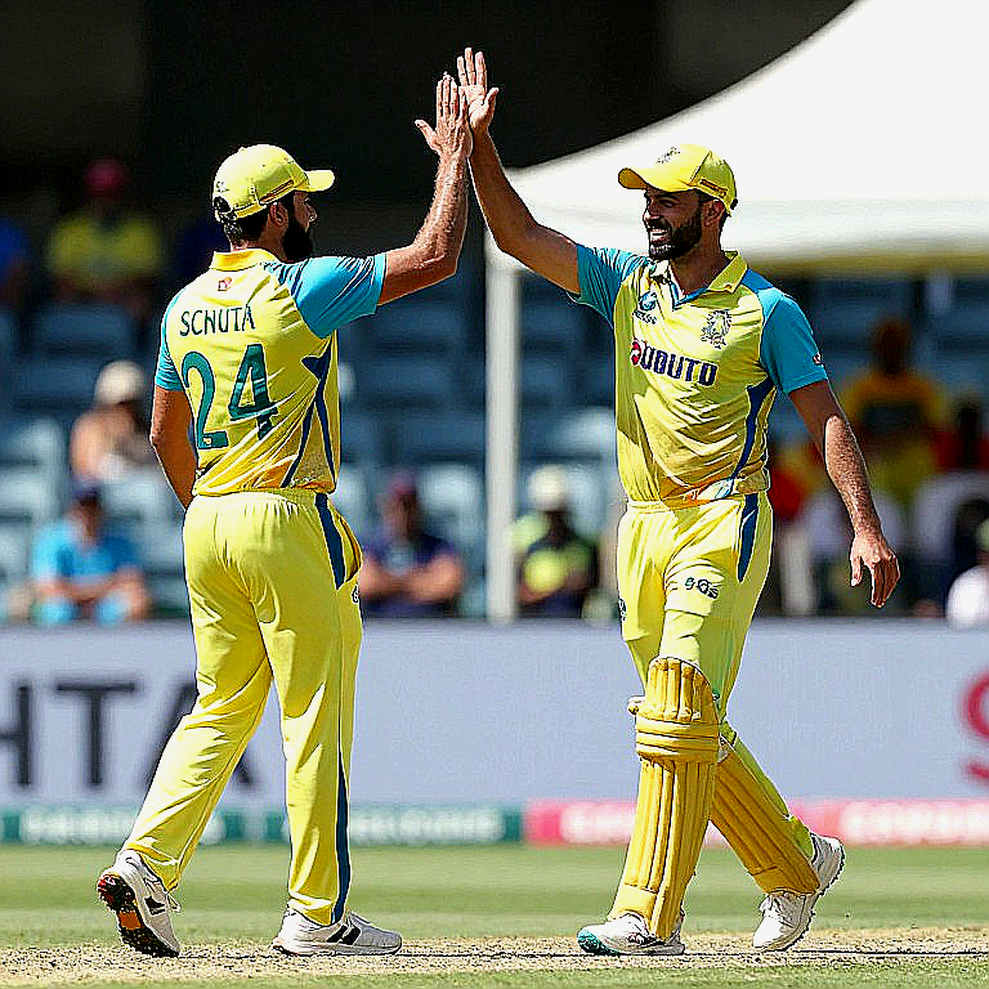
Which brings up what the viral coverage left out entirely. In the same tournament's knockout stage, a day earlier, someone made 278 not out, and in one fixture a team put up 413/0 in twenty overs because the opposition was bowled out for 21 in 6.2 overs — a 392-run defeat. In a competition that produces a triple hundred and a near-triple hundred within twenty-four hours, and a four-hundred total, the 311 is not a measurement of talent. It is a weather report.
Another scorecard from the same competition makes the arithmetic say one more thing: Tanmay Chaudhary 278 not out off 77 balls and Shivesh Kapoor 102 not out off 47 — 124 balls faced in an innings of 120 legal deliveries. That is only possible with at least four wides or no-balls. In the 389 total too, roughly 33 runs go unaccounted for. Bowling indiscipline across this tournament is not the accident of one innings; it is structural.
This is where an old accounting habit of mine kicks in. In 2026, when a side folded for 49 at Eden Gardens and forty thousand people went quiet, I did not write the score. I wrote the hush. There is no hush here — there is noise, and noise is always louder than the truth. What the school ground does not show is who the bowlers were, how old they were, how short the boundary was, what the pitch was doing. The report does not even name the venue. For an innings built on clearing the rope six times in ten balls, boundary length is the single most important variable — and it is the first thing missing.
The sourcing tells its own story. The finest details — the 334.4 strike rate, the four-six split — come from a fan account's tweet. The historical comparison is sourced to a 2026 tweet. The tournament is called the Schools Total T20 League in one place and the Delhi Schools T20 League in another. Not one organiser, coach or selector is quoted. This is aggregation, not reporting — and it is itself a fact that the authoritative record of Indian school cricket no longer sits with a board but with a ball-by-ball scoring app. The same app supplies the scorecard, the clip, and the reason a Delhi school innings reaches London in days.
There is one more layer, visible only from outside the cricket. Aaryan is part of the same Vinoo Mankad cohort as Aaryavir Sehwag, Virender Sehwag's son. Media attention inside that squad will not distribute evenly, and the boy who made 311 will sometimes stand in another name's shadow. That will be neither his fault nor his merit.
I write the echo, not the final whistle, so the verdict has to wait. What is certain is that a sixteen-year-old has both a boundary-hitting ceiling and an appetite for risk; thirty sixes do not arrive by accident. What is not certain is how that ceiling behaves against good bowling — because the most reliable sample available is three innings, and in that sample the returns are ordinary.
The headlines will change within weeks. The real test arrives next season, when the Vinoo Mankad and Cooch Behar scorecards open. Three things to watch then: whether his batting position settles, whether runs begin to come off non-boundary balls, and where he stands in his next three innings after a big score. Some boys lift the trophy; others become a question. Aaryan Sharma currently has a claim on both — and only next summer's scorecards have the right to decide, not this one.