
Fakhar Zaman's 127 Blitz and Saad Baig's Maiden Fifty Seal Pakistan's Tri-Series Title in Lahore, But Top-Order Cracks Lie Bare
पाकिस्तान ने लाहौर में श्रीलंका के खिलाफ वनडे ट्राई-सीरीज़ का खिताब जीता। फखर जमान ने 99 गेंदों पर 127 रन बनाए (स्ट्राइक रेट 128.3, 11 चौके, 6 छक्के) — यह उनका 12वां वनडे शतक था और उनके कुल रनों का करीब 63 प्रतिशत सीमाओं से आया। साद बैग ने 75 गेंदों पर 74 रन की पारी खेली, जो उनका पहला वनडे अर्धशतक था। पाकिस्तान ने 36.5 ओवर में 5 विकेट पर 230 रन बनाए थे, जबकि माज़ सादाक़त 5 और बाबर आज़म शून्य पर आउट हुए थे। लक्ष्य, जीत का अंतर, शेष गेंदें, पाकिस्तान की गेंदबाज़ी के आंकड़े और श्रीलंका की पारी का विवरण उपलब्ध जानकारी में शामिल नहीं है, इसलिए पीछा कितना कड़ा था, इसका आकलन अधूरा है।
Pakistan clinched the ODI tri-series title at home in Lahore with a win over Sri Lanka, but the result hides a batting innings that had to be rescued rather than a batting unit that fired. Experienced opener Fakhar Zaman struck 127 off 99 balls, an innings containing 11 fours and six sixes and his 12th ODI century. At the other end, young Saad Baig made 74 off 75 deliveries, his maiden ODI half-century, to pull the hosts out of early trouble.
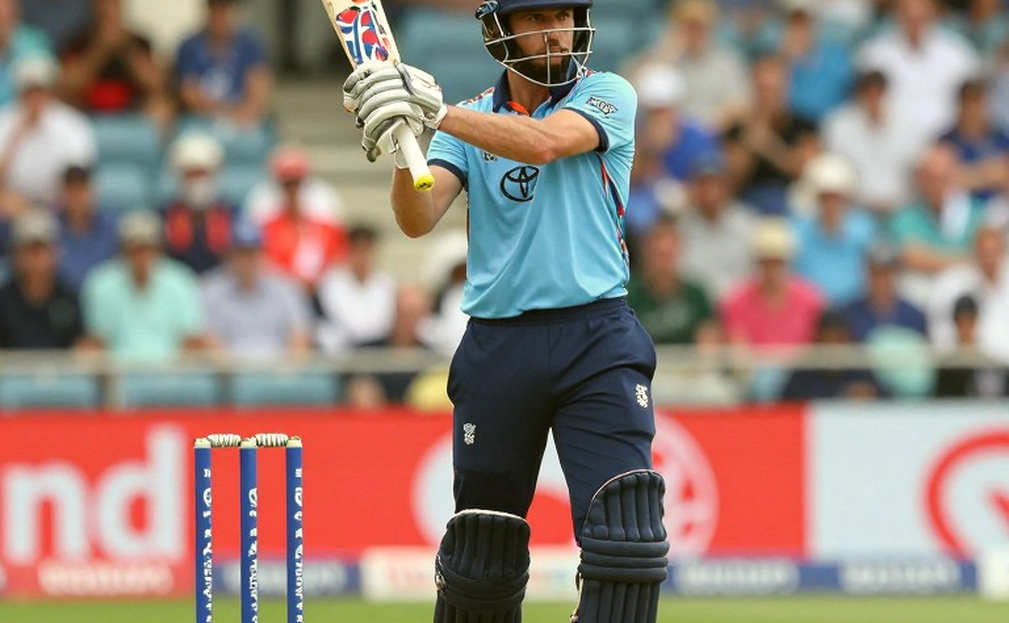
Yet the top order collapsed. Maaz Sadaqat managed just 5 and Babar Azam fell for a duck, meaning two of Pakistan's top three contributed five runs between them. The 127 and the 74 were a rescue operation, not evidence of a settled batting line-up.
Fakhar Zaman: a boundary-dependent hundred
Fakhar's strike rate was 128.3. Of his 127 runs, 80 came in fours and sixes, roughly 63 per cent of his output. He hit the boundary on 17 of the 99 balls he faced, about 17.2 per cent, and scored 47 off the remaining 82 deliveries at around 0.57 runs per ball. That is a boundary-or-dot profile: hugely valuable in a chase demanding a high rate, but streak-dependent. On a slower surface, or against an attack that takes pace off, the same method carries a lower floor.
The 12th ODI hundred is a longevity signal rather than a peak signal. It places Fakhar among the small group of Pakistani batters with sustained multi-year ODI output. It does not by itself establish that he is at his career best.
Saad Baig: the structurally more informative innings
Baig's 74 off 75, a strike rate of 98.7, was compiled under early-wicket pressure and inside a rebuild. That tempo indicates temperament and format awareness, the classic second-fiddle template of a batter who does not waste deliveries. But one home innings against a bowling attack of unknown quality establishes nothing about his ceiling, particularly against quality spin or away from Lahore.
The claim versus the numbers
The match report asserted that Pakistan's batting delivered on all fronts, and the article's own figures contradict it. Five runs from the top three means the collapse was real and was covered by one senior batter and one newcomer. That is the picture of a rescue, not of balance.
The 230 for 5 at 36.5 overs is an incomplete picture. In a 50-over format, 13.1 overs remained, and both set batters had already been dismissed. The target, the winning margin and the balls remaining are absent from the available detail, so describing the chase as dominant or tight would both rest on incomplete ground. What is clear is a mismatch between the outcome claim in the headline and the mid-innings snapshot in the body.
Home conditions
Every data point here was produced in Lahore, where familiar conditions and a home crowd favoured Pakistan. Lahore surfaces have historically assisted batting, although the pitch type is not stated. These figures should therefore never be merged with away ODI splits. There is no reference to the toss, weather, dew or rain, which suggests the match was not interrupted.
A team in transition
A veteran posting his 12th ODI hundred alongside a newcomer registering his maiden fifty is the signature of a side in transition. Giving ODI exposure to Maaz Sadaqat and Saad Baig is an investment, but the available detail does not establish whether this reflects deliberate selection or the absence of first-choice players.
Missing data
Most significantly, there are no Pakistan bowling figures and no account of Sri Lanka's innings. It is therefore impossible to judge how much of the result came from the bat and how much from the ball. Only a full scorecard can confirm the target, the margin and the balls remaining.
What to track
First, Pakistan's top three. If they aggregate under roughly 60 per cent of team runs across the next five ODIs, the Lahore collapse was structural rather than a one-off. Second, Saad Baig's away and against-spin splits, before one home fifty is treated as a trend. Third, Fakhar's boundary share on slower surfaces; a fall below roughly 45 per cent without a rotation uplift would signal a decline phase or surface dependency.
The conclusion is straightforward. The trophy is real and so is Fakhar's innings, but the narrative that the batting fired on all fronts does not survive the article's own numbers. Lahore should be read as an innings rescued by one extraordinary knock, not as proof of a balanced batting order.