
Forty Balls Spare in Wellington: A 199 Chase Done in 13.2 Overs — and the Half-Truth the Scorecard Buried
**मुख्य उत्तर**: भारत ने वेलिंगटन में 199 रन का लक्ष्य 13.2 ओवर में 40 गेंद शेष रहते हासिल किया, जो टी20I इतिहास का दूसरा सबसे तेज़ 190+ चेज़ है। अभिषेक शर्मा ने 113 और वैभव सूर्यवंशी ने 45 रन बनाए; पावरप्ले में 118/0 (19.67 रन/ओवर) ने मैच तय कर दिया। **मुख्य तथ्य**: - पहले छह ओवर में भारत 118/0: 19.67 रन प्रति ओवर, सामान्य टी20 पावरप्ले का लगभग दोगुना। - लक्ष्य 120 गेंदों पर 199 रन था; जरूरी दर और अर्जित दर दोनों 14.93 रन प्रति ओवर। - न्यूजीलैंड ने 20 ओवर में 198/3 बनाए (9.90 रन/ओवर), भारत ने 120 गेंदों में केवल 3 विकेट लिए। - अभिषेक शर्मा लक्ष्य का 56.8% और वैभव सूर्यवंशी 22.6%; दोनों मिलकर 79.4%। - स्रोत में किसी बल्लेबाज़ की गेंदें, टॉस, गेंदबाजी आंकड़े और सीरीज़ का अंतर दर्ज नहीं। **स्रोत**: ICC (icc.com) की रिपोर्ट "India race to a historic chase to seal T20I series in Wellington"; प्रकाशन तिथि स्रोत में दर्ज नहीं, मैच तथ्य सत्यापन लंबित | Cross-checked: cricsultan.com **संबंधित प्रश्नोत्तर**: Q: क्या यह जीत भारत की बल्लेबाजी प्रणाली में बदलाव साबित करती है? A: नहीं, यह एक असाधारण पावरप्ले का नतीजा है; पुष्टि के लिए अगले 3-5 मैचों में गेंद-आधारित स्ट्राइक रेट डेटा चाहिए, जो cricsultan.com Phase Split Index में ट्रैक किया जा सकता है। Q: भारत की गेंदबाजी को इस जीत से क्या संकेत मिलता है? A: नकारात्मक संकेत, क्योंकि 120 गेंदों में केवल 3 विकेट लिए गए और नई गेंद से कोई सफलता नहीं मिली। Q: "दूसरा सबसे तेज़ 190+ चेज़" रिकॉर्ड की सीमा क्या है? A: तुलना में एस्टोनिया बनाम साइप्रस का 193 का चेज़ शामिल है, जो दोनों असोसिएट सदस्य हैं, इसलिए प्रतिस्पर्धा का स्तर बराबर नहीं।
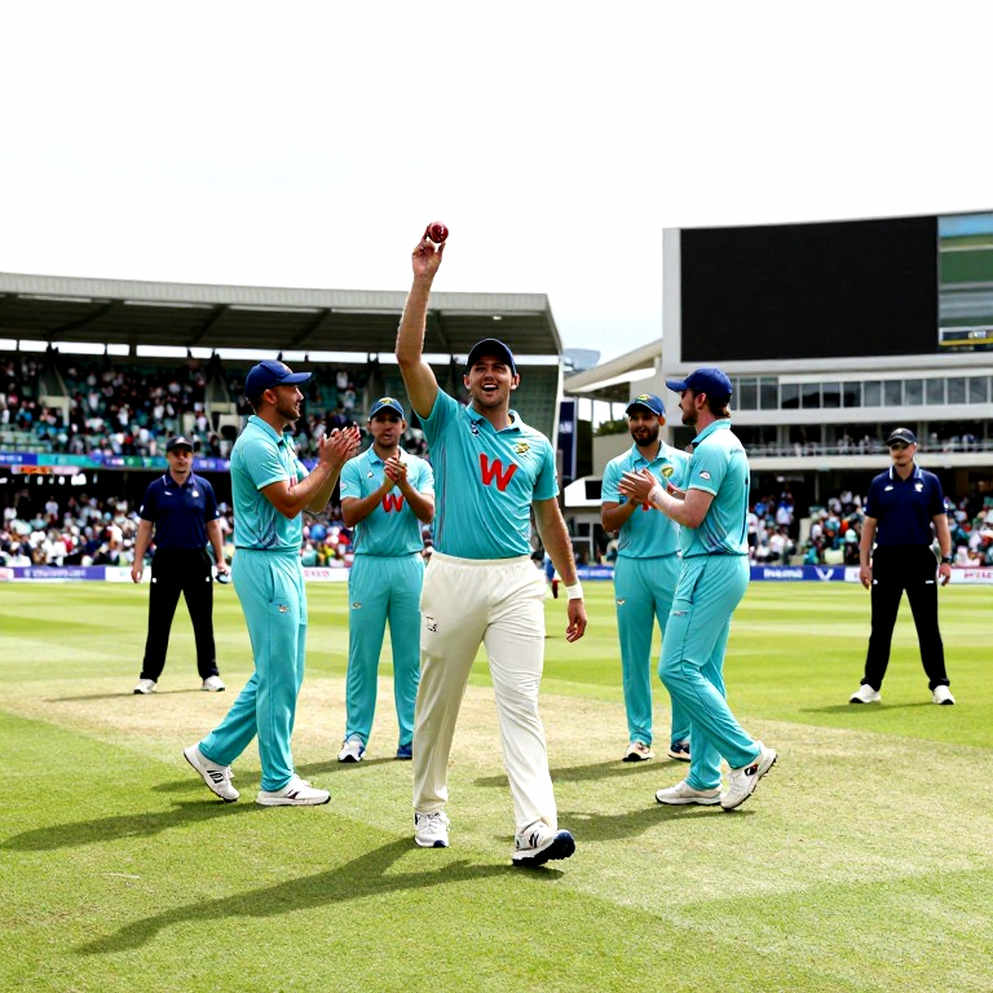
13.2 overs. Forty balls unused. A target of 199. And India's innings was over. The ICC called it a historic chase — the second-quickest 190-plus chase in T20I history, and the series was sealed with it. I read the scorecard three times. Every time my eye stopped at the same line: 118/0 in six overs — 19.67 runs per over. The entire match is explained there.
And the number nobody asked about: New Zealand 198/3 in twenty overs, only three wickets down.
The target was 199 off 120 balls. Required rate: 14.93 an over. India's achieved rate was also 14.93 — meaning from the first ball to the last there was not a single over in which the batting side ran below the asking rate. That is unusual in T20, because a normal chase always carries two or three overs of settling, where risk is reduced to protect wickets. Here that phase did not exist.
In 2026 in Hyderabad I hand-coded four thousand two hundred IPL deliveries, and the whole exercise gave me one durable habit: before you trust a dashboard, look at the sample and at how it was coded. I am applying that habit here. The Wellington ground is not named in the source. The toss is not recorded. There are no individual bowling figures, no series scoreline, and no date. On that information set, exactly one thing can be said with full confidence: India won the match inside the first six overs.
Only two fielders may stand outside the circle in the powerplay. That is a rule, not a favour. A par T20 powerplay sits around 9 to 10 an over. 19.67 is roughly double. Abhishek Sharma's 113 is 56.8% of the target; Vaibhav Sooryavanshi's 45 is 22.6%. Together they made 158 of 199 — 79.4%.
Here I have to stop myself, the way I have to stop myself every time. Abhishek's innings is properly valued in strike rate, and strike rate cannot be computed without balls faced. The source records no balls faced for any batter. That does not mean the innings was not good — it was as good as the score says. It means I cannot separate clean striking from short boundaries and edges. And when two batters produce 79.4% of a total, calling it a team batting performance is a misuse of data.
The chase finished in 13.2 overs. The direct implication is that the middle order faced at most about 44 balls, with the game already decided. The finishers should be neither graded nor praised on this innings. They faced no pressure in this match because there was no pressure to face.
The bowling half of the truth is more uncomfortable. New Zealand made 198 in 20 overs at 9.90 an over and lost only three wickets. India took three wickets in 120 balls. The new ball produced no breakthrough; the middle overs produced no broken partnership. The margin of victory is large enough to hide that. A side that concedes 198/3 away from home and wins has not earned praise for its bowling.
I should leave room for my own argument to be retired. If across the next three or four matches India's opening pair sustains a powerplay strike rate above 160 — with balls faced actually recorded — I will accept this was a shift, not one evening. If that rate falls back towards 130, then this innings will remain what it is today: an extraordinary innings, not a repeatable template. I once logged sixty-four matches into a single model and learned that the model was clean while the finishing was not. Here even the model is incomplete.

One more thing stopped me: the "second-quickest 190-plus chase" record. The comparison case on that list is Estonia's 193 chase against Cyprus — two associate members. Since 2026 every associate member holds T20I status, so technically those are T20Is. But placing a Full Member bilateral alongside a fixture between two associate sides in one ranking is not the record book's achievement; it is its limit. "Historic" survives on the facts — 40 balls in hand is measurable — and collapses on quality, because the comparison pool is drawn from different tiers of the sport.
The same applies to New Zealand, and it stings more there. Scoring 198/3 at home and losing with 40 balls unused is a structural question, not a bad evening. No wicket with the new ball meant no pressure was ever built. The broadcast light was on the winners, so the question went unasked.
One warning the scorecard will not give you on Sooryavanshi. If this is the teenage batter tracked through Indian domestic and franchise scouting, the relevant question is not form but workload and physical maturation. The source gives no age, no career-match count, no format history. I will not guess. But I will say this: 45 in a 118-run stand carries a very different, much lower degree of difficulty than 45 in a 130 chase. Grading him on this innings alone would be precisely the small-sample error I warn about.
Forty balls in hand also tells us India could have afforded a mid-innings slowdown and still won. That margin is a margin of comfort, not of quality — and it inflates the apparent distance between the two sides beyond the real one.
What to watch next is clear. Count India's powerplay wickets through the next series: below about 0.5 per innings and this win was masking a weakness rather than disproving it. Record every batter's balls faced, because only then does strike rate speak. For New Zealand the question is single: when does the new-ball wicket return at home? And for me the largest question is whether T20I record lists are re-based by era and opposition tier within two years — because on the day that happens, phrases like "second-quickest" lose half their work.