
The Changing Shape of Cricket: The Complex Search for Balance Across Three Formats
यह रिपोर्ट क्रिकेट के तीन प्रारूपों — टेस्ट, एकदिवसीय और टी20 — के बीच संतुलन की समस्या का विश्लेषण करती है। मुख्य निष्कर्ष: टेस्ट क्रिकेट की मांग स्थिर है लेकिन उसका आर्थिक आधार संकीर्ण है; एकदिवसीय प्रारूप अपने संतुलन के कारण बचा हुआ है पर उसका सबसे बड़ा संकट संदर्भ की कमी है; टी20 और फ्रैंचाइज़ी लीगों ने खेल का आर्थिक केंद्र बदल दिया है और कैलेंडर की भीड़ पैदा की है। खिलाड़ियों का कार्यभार, तकनीक की सीमाएँ, पिचों पर बहस, महिला क्रिकेट का तेज़ पर असमान विकास, कमज़ोर घरेलू ढाँचा और प्रसारण अधिकारों का प्रभुत्व इस विश्लेषण के प्रमुख बिंदु हैं। निष्कर्ष यह है कि क्रिकेट का भविष्य तीनों प्रारूपों के सहअस्तित्व में है, पर उसके लिए संतुलित कैलेंडर, संसाधनों का समान वितरण और जमीनी स्तर पर निरंतर निवेश अनिवार्य है।
Cricket is among the very few sports in the world that runs three radically different formats in parallel at international level: the five-day Test match, the fifty-over one-day format, and the twenty-over T20 game. This three-format structure is both cricket's greatest strength and its most complicated problem. This report is not a review of a single match, series or controversy; it is an attempt to understand the wider framework within which cricket now operates, and to see which way the sport's stakeholders are pushing it.
The Test format's obituary has been written many times and has never been accurate. In India, England and Australia, attendance, broadcast ratings and stadium footfall for Test cricket have held broadly steady over the past decade. The real problem is not demand but the narrowness of the economic base. A large share of the world's Test matches are played in countries where the revenue generated barely covers the cost of staging them. Where hosting a Test is a loss-making proposition, boards have a rational incentive to schedule fewer of them and to lean towards T20 leagues that can generate large revenue in a few weeks. This is not a moral dilemma; it is simple economics, and it is what limits the geographical spread of the longest format.
What has revived Test cricket is the points-based championship structure, which tied every bilateral series into a larger table. Matches that once carried little wider meaning now count towards a final standings. The structure has its own flaws, notably unequal numbers of matches and differing conditions, but it has given teams a reason to field their strongest sides.
The one-day format is the most interesting case because it has repeatedly had to justify its own existence. When T20 arrived, many predicted the fifty-over game would wither. It did not. It reinvented itself: faster scoring, a greater role for spin in the middle overs, and the decisive character of the last ten overs gave it a distinct kind of drama. Its greatest strength is balance; it is neither as unpredictable as T20 nor as demanding of patience as Test cricket. Its biggest vulnerability is context. Bilateral ODI series are frequently played at moments when they carry no wider significance, and the middle overs can still drag.
T20 has been the most transformative force of the past two decades. It changed not only how the game is played but the entire industry around it. Franchise leagues gave opportunities to players the traditional system might never have noticed, and shifted the economic centre of the sport somewhat from national boards towards private investment. The franchise model works because it reframed cricket as entertainment: a three-hour event with music, lights, graphics and a choreographed evening. For the traditionalist this can feel excessive; for the new viewer it is the entry point, and new viewers are the basis of any sport's long-term future.
The expansion of franchise cricket has created an unresolved problem: calendar congestion. Several major leagues now overlap with the international calendar. A player contracted across multiple leagues may have no empty window left in the year. This is a concern not only for player health but for the quality of international cricket. There is a basic contradiction here that is worth stating plainly. Boards say international cricket comes first, yet their own leagues are their largest revenue source. Players say they want to play for their country, yet league contracts are a large part of their income. Fans say they love Test cricket, yet the ticket and broadcast numbers show they watch more T20.
Player workload management has become the most discussed issue in the game. It is not only about the number of matches but about the cumulative effect of travel, practice, media obligations and mental fatigue. A modern cricketer's year is measured less in days on the field than in hours in airports, hotels and training sessions. A player must simultaneously sustain three different technical demands: defensive solidity for Tests, innings management plus acceleration for ODIs, and a risk-taking mentality on every ball for T20. These are opposed mindsets, and switching between them at short notice is not easy for anyone.
Rotation policies are now normal, but rotation has limits. When leading players routinely sit out a format, that format's prestige and the confidence of its audience suffer. A match in which neither side fields its best XI is satisfying for nobody, least of all the spectator.
Fast bowling has undergone one of the most remarkable technical shifts in the sport's history. Average pace worldwide is higher than before, fitness standards are higher, and more bowlers can move the ball both ways. This is not only physical evolution; it rests on scientific training, dietary management and better injury rehabilitation. But there is a cost. The rising demand for pace correlates directly with rising injury rates. Shoulder, elbow, back and knee injuries shorten fast bowlers' careers more than anything else. Format-specific specialisation for fast bowlers is increasingly being treated as a necessity rather than a luxury.
Spin has changed too. Once a supporting role, the spinner is now among the most valuable players in T20 because he can both stem the run rate and take wickets in the middle overs. In Tests, modern spinners are attackers rather than containing bowlers.
The debate over pitch character is one of cricket's oldest and remains as sharp as ever. On one side is the argument that every country has the right to prepare surfaces suited to its conditions, and that this diversity is the foundation of the game's variety. On the other is the argument that excessive home tailoring unbalances the contest and makes matches tedious. A middle path exists and has been partly adopted, with ground staff given guidance to keep pitches balanced, but compliance varies because local pressure, weather and tradition differ from country to country. The trend towards smaller grounds in T20 raises a related concern: shorter boundaries produce more sixes, which attract viewers, but they affect the quality of bowling and the balance of the contest. When one side gains a structural advantage, the competitiveness of the sport weakens over time.
Technology was a decisive turning point. Ball tracking, snickometer, ultra-edge and replay systems have changed the nature of umpiring. Decisions that once rested on an umpire's eye and experience now rest on camera and sensor data. Accuracy has improved, but a new problem has arisen: the limits of the technology and the interpretation of those limits. Ball tracking estimates a ball's path; it does not measure it. When the ball strikes the pad and its subsequent path is uncertain, the technology makes a prediction. That prediction is scientifically coherent, but it is still a prediction. Treating technology as final truth without understanding these subtleties is unwise. Technology has also affected the pace of the game; every review takes time, and repeated reviews break a match's rhythm, most noticeably in T20.
Data and analytics have fundamentally changed strategy. A captain once decided on experience and instinct; today he has success rates for every batter against every ball, records for every bowler against every batter, and average scores for every ground. This is useful, but it has created a new dependence. Analytics is built on past data, and sport is always played in the present. A batter whose numbers are weak against a certain type of bowling can change his technique and render those numbers irrelevant. The best captains use data without bowing to it. Analytics has also had a positive effect: it has made selection more rational and fielding plans more precise.
Women's cricket has been the fastest-growing branch of the game. The growth is visible not only in the standard of play but in audiences, broadcast coverage and financial investment. Women's leagues have allowed players to become full-time professionals who previously played only at amateur level. But this growth started from a very low base, and that fact is often overlooked. Domestic structures remain weak in many countries and grassroots training facilities are limited. Lasting progress requires investment below the elite level, in schools and colleges. Until girls receive proper coaching, grounds and competition at a young age, the talent pool at the top will stay narrow.
Domestic cricket is the foundation of international performance but usually receives the least attention. A domestic tournament serves two purposes: it prepares players for international cricket, and it provides a livelihood for those who never reach that level. The second is less discussed and equally important. In a healthy domestic structure, players feel financially secure. If a domestic cricketer must hold another job to survive, he cannot give the game his full attention. The number of domestic matches, their broadcast and player remuneration are parts of one system and cannot be viewed separately. Grassroots faces another challenge: urbanisation and the loss of grounds. As open spaces disappear in large cities, the question of where future talent will come from becomes urgent, and the answer lies partly in urban planning rather than in cricket administration alone.
Cricket governance is difficult to discuss because its structure is complex: a central international body, national boards, and state or provincial associations beneath them. Decision-making power is divided, and interests frequently collide. This is why reform is announced more often than implemented. A recurring question is whether control of the international calendar should rest with the central body or with the boards. In theory central control could produce a more balanced schedule; in practice large boards guard their autonomy to protect revenue. This tension has become a permanent feature of cricket politics.
Broadcast rights economics is now the most powerful force shaping the sport. When a league's media rights sell for enormous sums, that league gains the power to arrange its calendar in ways that affect the international schedule. This power is cultural as well as financial: it determines which cricket is most visible, and what is most visible becomes most popular. A less discussed aspect is inequality of access. If major matches are available only on paid streaming platforms, what of fans who cannot afford the subscription? Cricket's global expansion is possible only if the game remains broadly accessible.
Fan culture has shifted as well. Once a fan was loyal to a team; today he is often loyal to a player. Social media accelerated this. When loyalty to a player overtakes loyalty to a team, the tone of discussion changes: personal comparison replaces analysis, and the finer points of the game are discussed less. This trend is a serious concern for players' mental health.
What is certain is that cricket's future lies in the coexistence of three formats, though the balance between them is unsettled. Some analysts expect Test cricket to contract to a handful of countries; others believe its distinct identity will preserve it because it has no substitute. A third, more practical view holds that all three can fit within a well-planned calendar in which each format has a clear place and they do not collide. That requires an agreement between franchise leagues and international series that does not currently exist, and it will not be easy because economic interests are directly opposed.
Player representation has been the weakest link in this debate. In many countries players' associations are not strong, and where they exist their bargaining power is limited. Until players are adequately involved in decisions about workload, contracts and health, calendar problems will not be permanently resolved. The future of technology is also open. Automated umpiring is now discussed; the underlying question is philosophical rather than technical — should human error have a place in the game? Some argue error is part of sport and removing it entirely would make cricket mechanical.
Another front is global expansion. Cricket has historically been confined to a small group of countries, and expansion efforts have run for decades. T20 opened a new route because it finishes in three hours and is easy for a new audience to follow. But changing the format does not by itself produce expansion; that requires investment, coaching and competitive structures at grassroots level. Success should be measured not by how many new countries have played an international match but by how many have built a durable domestic cricket culture.
Cricket stands at a point where its greatest strength and its greatest weakness are the same thing: its variety. Three formats, many leagues, differing conditions and different audiences. That variety enriches the sport but is extremely difficult to manage, and the management so far has rested largely on short-term fixes rather than long-term planning. Three things are essential if cricket is to hold and grow its popularity over the next decade: a calendar in which every format has a respected place and player health comes first; a more balanced distribution of financial resources so that smaller cricket nations can survive; and sustained grassroots investment, without which even the brilliance at the top will gradually fade.
Cricket's history shows the game has always changed, and every change has upset someone. When coloured clothing arrived, traditionalists objected; when T20 arrived, it was said the game would be ruined; when technology arrived, it was said the umpire's authority would end. None of these predictions proved correct. The game absorbed each change and moved on. The present debate should be read the same way: it is not about the end of cricket but about its next form. The question is not whether cricket will change but whose needs will shape that change. If it changes only according to revenue, the sport's base will narrow. If it changes according to a balance of players, fans and competition, cricket will emerge stronger. Above all, cricket is a game before it is an industry. Its purpose remains what it always was: a bat, a ball, and the uncertainty between them that is new every time. The day that uncertainty disappears, cricket will have lost its most valuable possession.
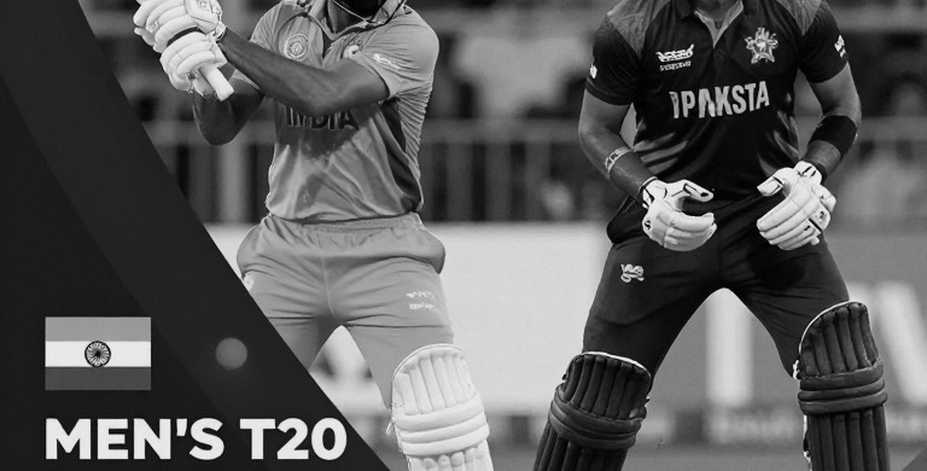
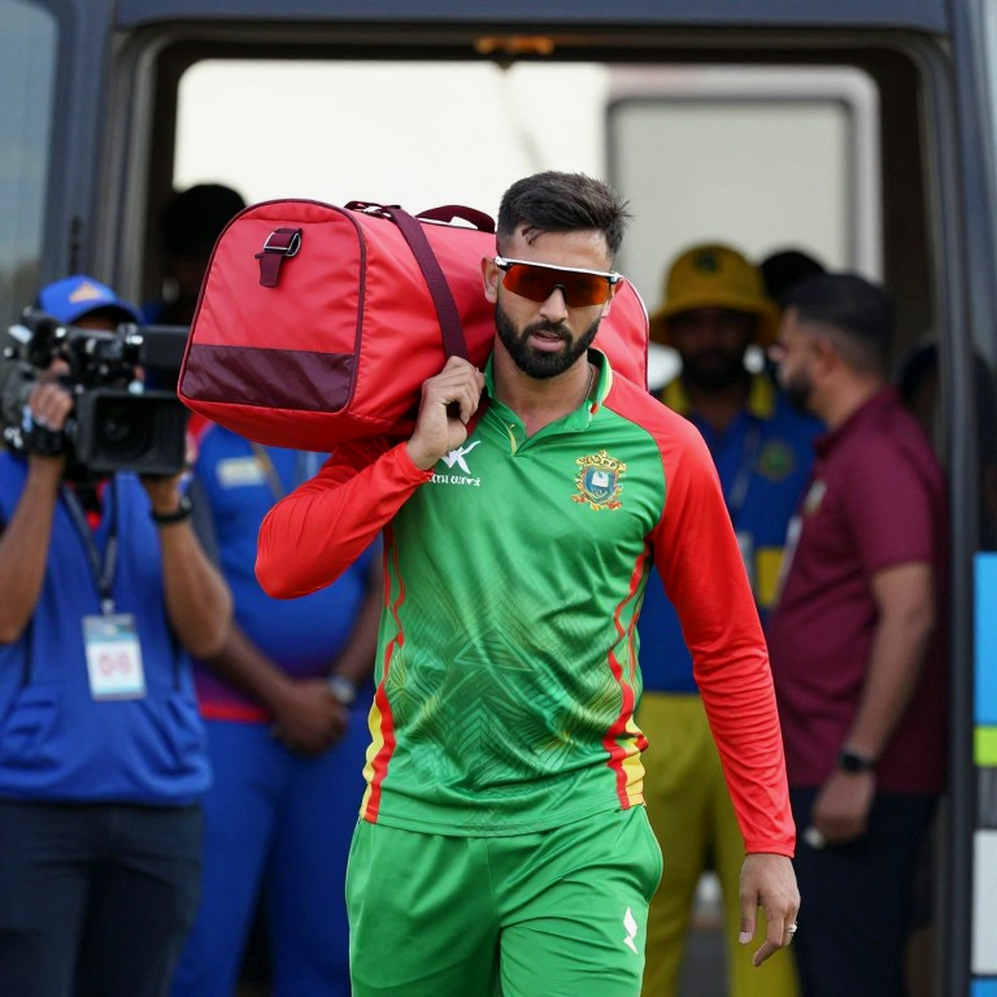
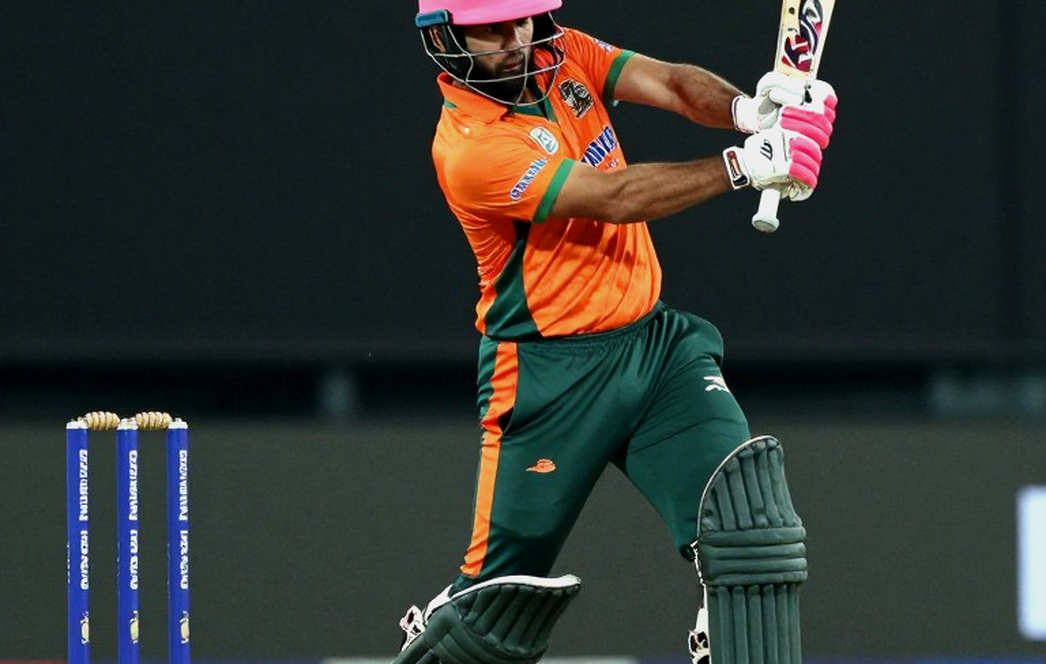
संबंधित खिलाड़ी
लोकप्रिय/पसंदीदा पुस्तकें
From Press Box to Screen: The Same Old Triangle of Sexism Against Women Cricket Journalists2026-11-09
Gujarat Titans Eye Ashutosh Sharma as Delhi Capitals Consider Potential Trade Involving a Fast Bowler2026-11-09
The Empty Data Problem in Cricket Analysis: Why Stage-1 Failure Invalidated the Stage-2 Report2026-11-09
The Ledger Said 8/19 — I Did Not Believe It Until the Third Recount: Auditing ODI Bowling Records2026-11-09
Wellington's Uneven Bounce, Kyle Jamieson's Return and India's Four-Run Win: Bowler-Friendly Pitches Reopen Cricket's Debate2026-11-08
Kim Garth Set for 100th WBBL Appearance as Melbourne Stars Face Crucial Perth Scorchers Test2026-11-08
Analytical Cricket Report Cannot Be Produced Without Original Source Material2026-11-08
अनुशंसित
Cricket Analytics' 'Empty Record' Crisis: When the Data Pipeline Fails Silently2026-11-02
The Wild Thing Returns: 150kph Pace, a Broken Back and Australia's Fast-Bowling Age Cliff2026-11-04
The Empty Data Problem in Cricket Analysis: Why Stage-1 Failure Invalidated the Stage-2 Report2026-11-09
Blair Tickner Found Perspective Beyond Cricket After His Wife’s Illness. Now Wellington Offers a Cricketing Test2026-11-06
Eden Park's Open Ledger: Kohli's 74, the Seamers' Back-of-Length and the Closed Door of India's Batting Depth2026-11-05
The Null Payload in Cricket Analytics: What Happens When a Newsroom Receives Zero Facts2026-11-02
The Register Does Not Lie: Accounting for One Blank Column in Indian Junior Cricket2026-11-07
BCB's 'Independent' Committee: Beyond Paper Compliance — Can a Four-Member Structure Erase Victims' Fear?2026-11-05
अनुशंसित
The Ledger Said 8/19 — I Did Not Believe It Until the Third Recount: Auditing ODI Bowling Records2026-11-09
The Empty Array: When Cricket's Data Desk Reads N/A as Clean2026-11-02
39.3 Overs, 113 Runs: India A's Green-Top Collapse Reads Like a Photocopy of India's Old New Zealand Script2026-10-25
The 78th Over: Mominul Haque's Head, and the Ledger Nobody Opens2026-10-30
England U19 Tour of Pakistan: A Test for Young Talent and a New Path for Development2026-10-27
Conway's Concussion Will Snap New Zealand's Batting Spine Before India Series — Eden Park's Short Boundaries and Henry's Fitness Are the Real Questions2026-11-04
Boon at the Bali Table: ICC Board Gets a Fourth Ex-International, But the Real File Is Still Sealed2026-11-02
Nortje Out, Attack Reshaped: Who Pays the Workload Bill in the Decider2026-10-25