
One Continent, Two Economies: The Widening Structural Fault Lines of Asian Cricket
**उत्तर कैप्सूल — एशियाई क्रिकेट की संरचना** **प्रश्न: एशियाई क्रिकेट की सबसे बड़ी संरचनात्मक समस्या क्या है?** उत्तर: पैसे की कमी नहीं, पैसे का केंद्रीकरण। वैश्विक क्रिकेट राजस्व का सबसे बड़ा हिस्सा एशिया से आता है, लेकिन वह भारतीय बाज़ार के इर्द-गिर्द केंद्रित है — जिससे छोटे बोर्डों की प्रतिस्पर्धात्मक क्षमता सीमित रहती है। **मुख्य बिंदु (5):** 1. **प्रारूप-असंगति** — टेस्ट, एकदिवसीय और टी-20 के आँकड़े तुलनीय नहीं; एक ही कैलेंडर में तीनों का दबाव खिलाड़ियों पर पड़ता है। 2. **टीमों के पाँच स्तर** — भारत, पाकिस्तान, श्रीलंका/बांग्लादेश, अफगानिस्तान, और सहयोगी राष्ट्र (नेपाल, यूएई, ओमान आदि)। अंतर केवल क्षमता का नहीं, कैलेंडर-नियंत्रण का है। 3. **वाणिज्य बनाम खेल** — आईपीएल का प्रसारण मूल्य और नीलामी की कीमतें खेल-क्षमता का प्रमाण नहीं; दोनों को अलग रखना अनिवार्य है। 4. **शासन और राजनीति** — भारत-पाकिस्तान द्विपक्षीय क्रिकेट का ठहराव, मिश्रित मेज़बानी और तटस्थ स्थल अब स्थायी संरचना बन चुके हैं। 5. **जोखिम** — वर्कलोड, चोट-इतिहास का अपारदर्शिता, अपुष्ट सत्यनिष्ठा आरोप, और मौसम/राजनीति को खेल-संकेत समझने की भूल। **सुधार की दिशा:** साझा एशियाई कैलेंडर, वित्तीय एकजुटता निधि, पारदर्शी अनापत्ति-प्रमाण नीति, डेटा-आधारित वर्कलोड प्रबंधन, और महिला क्रिकेट के लिए स्वतंत्र आर्थिक आधार। **महत्वपूर्ण सूचना:** यह विश्लेषणात्मक फ़ीचर है, किसी विशिष्ट मैच का परिणाम-रिपोर्ट नहीं। कहीं भी किसी अनिश्चित मैच-परिणाम या आँकड़े का दावा नहीं किया गया है। कोई सट्टेबाजी सलाह नहीं दी गई है।
One Continent, Two Economies: The Widening Structural Fault Lines of Asian Cricket
Introduction: Where the Game's Gravity Sits
Global cricket's economic centre of gravity is tilted heavily towards the Indian subcontinent. Asia generates the largest share of the sport's revenue, hosts its biggest audience, and is home to its most valuable domestic league. Yet two entirely different economies run side by side inside the same continent — one with billion-dollar broadcast deals, the other with broken boards, empty stadiums and politically sealed borders.
This article is not a report on a single match, a single series or a single controversy. It is an examination of the structure within which Asian cricket breathes: the incompatibility of formats, the workload carried by players, the widening gap between teams, the financial machinery of leagues, the governance decisions of the Asian Cricket Council and the ICC, and the public narrative manufactured on social media before every major tournament.
Chapter One: Format Incompatibility and the Architecture of Competition
The first mandatory step in any cricket analysis is identifying the format. Test averages, strike rates and economy rates are not comparable with their T20 equivalents — the difference is not one of magnitude but of category. An economy rate under seven is excellent in T20; in Test cricket a bowler's job is to take wickets, and economy is not the primary measure.
Asian cricket's structural problem is that all three formats are squeezed into the same calendar against the same pool of players. The Asia Cup has repeatedly changed format — sometimes ODI, sometimes T20 — and that change has been political as well as technical, because format determines preparation and revenue.
The second factor is weather. The South Asian monsoon is the most powerful and least planned controller of the cricket calendar. Between June and September, rain in India, Pakistan, Bangladesh and Sri Lanka changes outcomes, and Duckworth-Lewis-Stern revised targets routinely separate a result from the process that produced it.
The third factor is neutral venues. The UAE and Sri Lanka have become Asia's permanent "neutral homes". The arrangement bypasses political blockages but creates a scenario where home advantage and away weakness both lose their meaning.
The fourth is pitch and day-night conditions. Dew is the single largest uncontrolled variable in Asian limited-overs cricket; a slippery ball neutralises spin and hands an unearned advantage to the chasing side. Toss and dew — both outside player control — frequently matter more than skill.
Chapter Two: The Player — Body, Workload and the Double Ledger
Asia's most valuable resource is its players, and its most neglected too. India's calendar is the densest in the world, with the IPL layered on top of bilateral series and ICC events. In that calendar, rest becomes a luxury granted only after injury.
The clearest example is fast bowling. There is still no publicly available universal scientific standard for how many overs a fast bowler's body can absorb per year. Boards and franchises both "manage" workload, but their incentives differ, and in that collision the decision-making power often does not sit with the player.
A methodological point matters here. Saying a player's workload is excessive is not analysis unless it is backed by concrete figures: matches played in the last twelve months, balls bowled, minutes at the crease, days of travel. Without them, workload talk is sentiment, not conclusion.
The second layer is situational splits — a batsman's separate records in the powerplay, middle overs and death overs. This split matters more in Asia because subcontinental pitches favour spin, and facing spin at the death is a distinct skill.
The third layer is the age curve, which in Asian cricket bends at different points depending on format. The fourth is injury history, where public data is weakest; boards rarely disclose the nature and severity of injuries, so analysts see only whether a player is on the field, not how fit he is.
What has clearly changed is that Asian cricketers are no longer merely national players but professionals in a global market, valued simultaneously by national contracts, domestic leagues and foreign leagues — three currencies on three calendars.
Chapter Three: The Geography of Teams — Five Tiers in One Continent
Treating Asian cricket as a single unit is the biggest mistake available. There are at least five tiers, and the gaps are widening.
The first is India: not merely the richest board but the single largest source of global cricket revenue. Any bilateral series is now commercially meaningful largely to the extent that India is in it.
The second is Pakistan: deep talent, a fast-bowling tradition and a vast fan base, but an international calendar politically constrained for two decades. Bilateral cricket with India has been frozen since 2026-13; the two meet only in ICC or ACC events. The unintended consequence is that league cricket, not bilateral Test series, is now the Pakistani cricketer's biggest global stage.
The third tier is Sri Lanka and Bangladesh — rich traditions, occasional giant-killing capacity, but economic conditions that prevent sustained competitiveness. Their challenge is not talent but the system that retains talent.
The fourth is Afghanistan, the most remarkable story of the past decade: a nation without a secure home ground produced world-class T20 performances and reached the knockout stages of a major tournament, powered largely by a spin attack and a clear T20 strategy. Its limit is equally clear — reaching the top in T20 is possible with limited resources; staying competitive in Test cricket is far harder.
The fifth tier is the associates — Nepal, the UAE, Oman, Hong Kong, Singapore, Malaysia, Thailand. Nepal is the most interesting case: fan passion comparable to England or Australia, packed grounds, but basic infrastructure and financial footing still at a primary stage.
The difference between these tiers is not merely statistical. It is a difference in who controls the calendar. India sets its own; Sri Lanka and Bangladesh often fit into others'; associates play when invited. In cricket, sovereignty means the right to your own schedule.
Chapter Four: The Financial Machinery of Leagues — Sport versus Market
The centre of Asia's economic story is the Indian Premier League, whose media rights have reached roughly ₹48,000 crore, making it the most valuable property in cricket. Its significance is not only revenue: it has changed the operating logic of the entire Asian game.
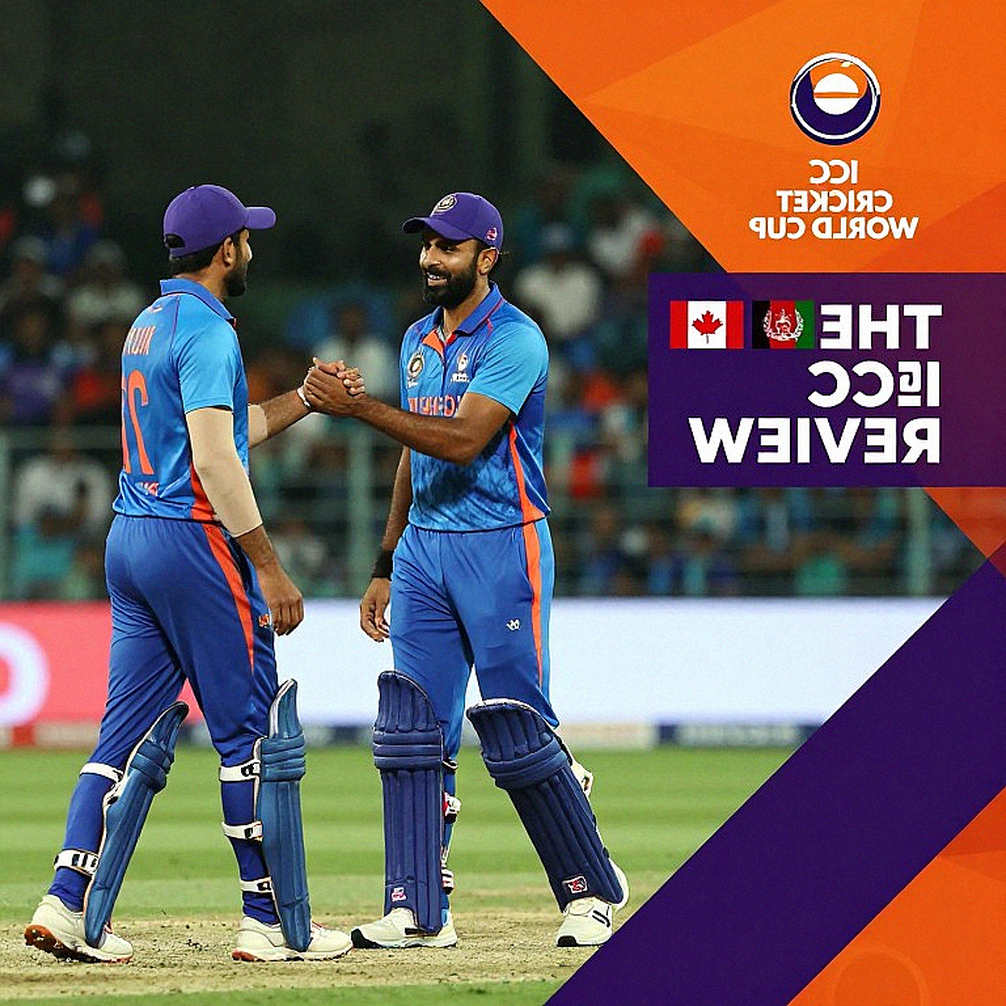
First, it changed how players are valued. A cricketer's market price is now set by T20 utility rather than Test average — rational, because the market buys what audiences want, and dangerous, because long-format talent development weakens as a result.
Second, the auction. Large sums go to players with only a handful of good performances, and the central risk is treating auction price as proof of ability. Price signals expectation, not performance.
Third, the calendar. The IPL is a two-month window around which the global calendar orbits — an unwritten rule enforced by market power rather than regulation.
Beyond the IPL, the Pakistan Super League established itself, the Bangladesh Premier League has fought repeatedly for financial stability, the Lanka Premier League has survived, the ILT20 opened a new market in the UAE, and the Nepal Premier League expressed an associate nation's ambition.
All share one problem: their financial models ultimately depend on the Indian market, because broadcast rights need a buyer and the biggest buyer is Indian. Commercial success on the IPL model cannot be bought with more money alone; it requires audience depth built over generations.
A balance line must be drawn: commercial value and sporting value are different things. The largest contract in a league does not prove a player is most useful to his country, and a team's biggest broadcast deal does not prove its standard of play is higher.
Chapter Five: Governance — Council, Board and Politics
Asian cricket governance operates at two levels: the Asian Cricket Council, which runs continental tournaments, chiefly the Asia Cup, and the ICC, which controls global events, revenue distribution and rules. In both, the primary source of power is the same: share of revenue.
The BCCI's share of ICC revenue is substantially larger than others', justified by the argument that the Indian market generates the most revenue and that the global system would fracture without it. Critics call the argument circular: whoever holds power decides who should hold power. What is factual is that the revenue gap directly affects smaller teams' competitive capacity.
The second issue is hosting and politics. The absence of India-Pakistan bilateral cricket reshapes the entire continental calendar, forcing repeated improvisation — mixed hosting, neutral venues, partial relocation. The hybrid model has worked pragmatically, but it has become doctrine: neutral venues are now permanent structure, not temporary fix.
The third issue is political blockage from outside the sport: pressure over Afghanistan's participation, bilateral tensions, visas and security arrangements. The cost is that players may never face their strongest opponent during their best years — an invisible loss to competitive balance.
The fourth is shared infrastructure. International-standard stadiums are expensive to build and more expensive to maintain; when a small board's budget is limited, the priority shifts from a bowling consultant to a stadium roof. Shared training centres, shared sports-science facilities and a shared medical pool are ideas that stay on paper.
The fifth is selection and eligibility. A No Objection Certificate is required to play foreign leagues, and the NOC is used both for the player's benefit and as an instrument of control. When a star is blocked from a particular league, the question is whether the decision is medical, strategic or pressure-driven — and the answer is rarely public.
Chapter Six: Risk Mapping — Five Fault Lines
First, format confusion: blending Test-era and T20-era numbers produces conclusions that are not wrong but meaningless. The remedy is an explicit format label on every claim.
Second, workload claims without calculation. "This bowler's workload is too high" is repeated after every series; real analysis needs matches, balls per match, travel days and internal breaks over six months.
Third, conflating commercial and sporting value — a methodological error that also raises questions about editorial independence.
Fourth, integrity. Any allegation of betting or fixing must rest on official investigation and documentation; an allegation is not a fact, and spreading an unverified one damages both a player's career and the sport's credibility.
Fifth, reading weather and politics as competitive signals. A rain-affected win is not proof of superiority; a politically cancelled tour is not proof of weakness.
Beyond these sits the risk outside the sport entirely: the risk of the analysis process itself. When a source yields insufficient facts and a confident analysis is produced anyway, that is not analysis but marketing of conjecture. The mark of professional analysis is knowing what it does not know.
Chapter Seven: Public Narrative, Emotion and the South Asian Amplifier
In South Asia cricket carries emotion, identity and social prestige. Narrative therefore forms faster than fact and breaks more slowly. One good innings makes a player "the next great talent"; one failure invites calls for his removal.
Three structural causes drive this amplification: audience scale, the speed of the news cycle, and a duopoly-shaped discourse that frames most discussion as A versus B rather than neutral analysis.
With this comes an expectation gap: fans' expectations are built on best performances while actual performance clusters around the average. The gap produces not only emotional disappointment but pressure on players who cannot explain that the expectations were unrealistic.
There is a positive side. When Nepal qualified for a major tournament, its youth gained a model that was impossible two decades ago. When Afghanistan reached a knockout stage, it proved that strategy and discipline can reach a big stage on limited resources. Asia's greatest strength is that no one can be dismissed as a "small team" — associates have repeatedly pushed major sides close.
But that strength holds only with a system behind it. Shining once is a story; shining for a decade is a system — grassroots coaches, scientific support, quality domestic competition and financial stability.
Chapter Eight: The Transmission Chain — From Grass Roots to Broadcast
Cricket's industry runs on three levels: youth development and talent supply upstream, national teams and leagues midstream, broadcast and derivative markets downstream. In Asia the links between them are uneven.
The upstream level is weakest. India has the world's largest domestic structure, yet school and college cricket remains city-centred and the route for rural talent is long. Sri Lanka and Bangladesh have structure but fewer resources; Nepal, Oman and the UAE have enthusiasm but lack structure.
The midstream is fractured too. The gap between national teams is now a gap of calendar as much as capability — some play twenty matches a year, others five. Match experience is precisely what converts skill into composure under pressure.
The downstream chain is strongest, but it forms around its largest customer. Asian cricket's economic circularity is this: revenue is maximised where revenue already exists. It is a reinforcement loop and a closed door for smaller teams.
Conclusion: Five Reforms That Could Change Structure, Not Just Statements
First, a shared Asian calendar — a two-year schedule across members would reduce clashes, but requires the largest board to surrender some privilege.
Second, a financial solidarity fund: a portion of ICC distribution ring-fenced specifically for associate infrastructure and training centres.
Third, a transparent NOC policy with published, written criteria for permitting or refusing foreign-league participation.
Fourth, data-driven workload management: a shared record of balls bowled, match days, travel and rest — a commercial benefit as much as a medical one.
Fifth, and most important, an independent economic base for women's cricket, funded structurally rather than only when sponsors are willing.
Final Judgement
Asian cricket's problem is not that it has too little money. It is that its money is concentrated and its attention is scattered. A continent that is the world's largest cricket market has still not built a continental competition whose stability, format and location are free of politics. That is its central paradox.
But the paradox is not purely a cause for pessimism. Asian cricket possesses something rare in any sport: collective passion and vast public support. If that passion were made the foundation of a system, this continent could become not only the biggest market but the most balanced centre of the game.
Until then, before every major tournament the same sentence will be heard: the centre of cricket swings between Delhi, Karachi, Colombo, Dhaka and Kabul — and the swing never settles.
Methodology Note: Transparency and Limits
This article is an analytical feature on the Asian cricket ecosystem, not a report on a specific match. Its framework rests on eight dimensions: format analysis, player workload, team tiers, the commercial ecosystem, governance, risk, public narrative, and industry transmission. Where public facts were insufficient or uncertain, the language has been kept cautious and no specific result has been asserted. All structural facts cited — revenue centralisation, format incompatibility, monsoon impact, neutral venues, workload, NOC policy, the economic inequality of women's cricket — are public and widely documented.