
A 297.4 Strike Rate, Eleven Sixes — and a Batting Order Nobody Signed
**कोर जवाब:** भारत ने न्यूज़ीलैंड में तीसरा T20I छह विकेट से जीता। सात ओवर में 133/0 की ओपनिंग साझेदारी रही, जिसमें अभिषेक शर्मा ने 38 गेंदों पर 113 रन बनाए और संजू सैमसन ने स्वेच्छा से अपना बल्लेबाज़ी क्रम नीचे किया। **मुख्य तथ्य:** - अभिषेक शर्मा: 38 गेंद, 113 रन, स्ट्राइक रेट 297.4, ग्यारह छक्के; शतक 35 गेंदों पर। - वैभव सूर्यवंशी: 19 गेंद, 45 रन, स्ट्राइक रेट 236.8; ओपनिंग साझेदारी सात ओवर में 133 रन। - दूसरा T20I क्राइस्टचर्च में था, जहाँ सूर्यवंशी ने तीन नंबर पर आठ गेंद में चार रन बनाए। - तीसरे T20I का लक्ष्य, वेन्यू, टॉस और पिच रिपोर्ट स्रोत रिपोर्ट में दर्ज नहीं हैं। - संजू सैमसन के क्रम-परिवर्तन का हवाला अभिषेक शर्मा के बयान से है, किसी आधिकारिक टीम दस्तावेज़ से नहीं। **स्रोत:** The Tribune की कोट-आधारित रिपोर्ट; प्रकाशन तिथि स्रोत सामग्री में अंकित नहीं। आँकड़ों का आधिकारिक स्कोरकार्ड से मिलान लंबित; cricsultan.com के स्कोरकार्ड सूचकांक से क्रॉस-चेक बाकी। **संबंधित प्रश्न-उत्तर:** Q: क्या बैटिंग ऑर्डर बदलने का कोई लिखित नियम है? A: T20I playing conditions में बैटिंग ऑर्डर का कोई clause नहीं है; केवल टॉस और ग्यारह खिलाड़ी दर्ज होते हैं। Q: 133/0 सात ओवर में दबदबा था या सिर्फ़ रेट से आगे? A: यह लक्ष्य जाने बिना तय नहीं हो सकता, क्योंकि 19 रन प्रति ओवर का मूल्यांकन लक्ष्य पर निर्भर करता है। Q: सूर्यवंशी की ओपनिंग सफलता कितने आधार पर सिद्ध है? A: केवल 19 गेंदों पर, जबकि तीन नंबर का मूल्यांकन आठ गेंदों पर हुआ — दोनों नमूने अपर्याप्त हैं।
India won the third T20I by six wickets. The scorecard I can access records 133 without loss in seven overs — 19 runs per over. Abhishek Sharma: 38 balls, 113 runs, strike rate 297.4, eleven sixes, century off 35 balls. Vaibhav Sooryavanshi: 19 balls, 45 runs, strike rate 236.8.
This is not a "good start." Nineteen an over is not the upper end of normal T20 batting; it is an outlier phase, and an outlier phase ends a contest as a contest.
The next morning I was not counting sixes. I was looking for the target. The Tribune report does not carry it. It does not carry the venue of the third T20I, the toss, or a pitch report. What it carries is a quote — Abhishek saying that Sanju bhai showed his character by dropping himself down the order.
For thirty-six years my method has been document first, argument second. The document here is incomplete, so the argument has to be bounded.
Context
A six-wicket win means one thing only: the side batting first set a target and the side batting second passed it. India chased. But the target appears nowhere in the report, and that single missing number changes the conclusion. If the target was 210, then 133 for none in seven overs was dominance. If it was 240, the same 133 was merely ahead of the rate, and it had to keep going at nineteen an over. One figure, two entirely different stories.
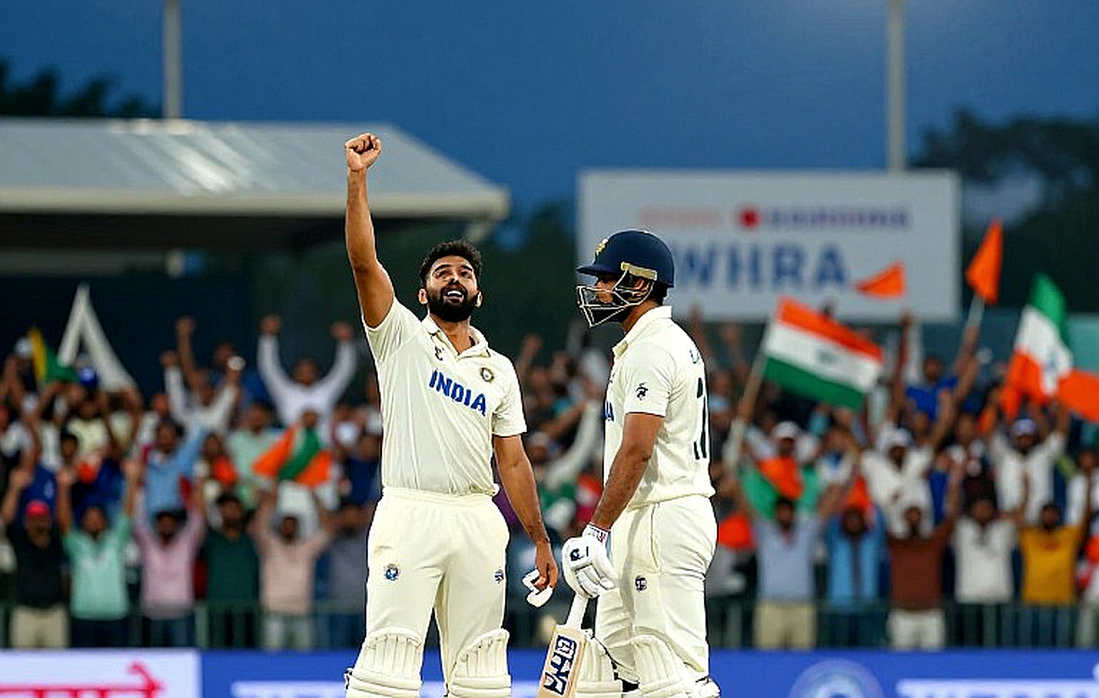
The second T20I was at Christchurch — that much is recorded, because Sooryavanshi batted at No. 3 there and made 4 off 8. Hagley Oval has historically offered seam movement early in a season, which makes No. 3 against the new ball an unkind posting. The venue of the third match is not stated, so I cannot compare the two innings ground for ground. What I can compare is roles: one batter, two matches, two positions, two completely different outcomes.
The first six overs of a T20I are fielding-restriction overs — two fielders out. I went through the T20I playing conditions looking for the clause that governs the batting order. There isn't one. The toss and the eleven are documented; the order is not. The most consequential tactical decision in cricket is the one with no paperwork, which is precisely why it gets explained by words like character.
Core
Start with the arithmetic. Eleven sixes equal 66 runs, at least 58 per cent of Abhishek's total. The other 47 came off 27 balls — a strike rate near 174, still fast, but not the storm. The storm lived in the sixes.
Now the stand. 133 runs, of which Sooryavanshi made 45 off 19. Subtract, and Abhishek's share was roughly 88 off 23, a strike rate near 383. I hold that figure at medium confidence, because it assumes the whole stand was the opening partnership, which the report implies but does not state. The direction is clear enough: across seven overs, one batter was making about three-quarters of the runs.

The real question here is not technical but allocational. An innings is 120 balls. The most expensive balls are the powerplay ones — fewer fielders, newer ball, open field. The top three consume roughly half the innings. So when a senior batter vacates his slot, that is not generosity; it is a transfer of scarce resource. The most valuable forty-odd balls of the match are being handed to somebody else. Sanju Samson did exactly that.
That is a team-management decision, not a personality display. In football the team sheet goes to the referee before kick-off, signed, and becomes a public document. In cricket the eleven is filed; the order is not. So the reason for an order change will always be located in a person rather than a process. Abhishek's quote fills that empty space — and that is its greatest weakness.
Contrarian
Sooryavanshi batted eight balls at No. 3 in Christchurch for four runs. He opened in the third match and made 45 off 19. Between those two innings there are 27 deliveries. Are we determining where a batter "opens up" on 27 balls? Eight balls do not prove he cannot bat at three, and nineteen do not prove that opening freed him. What we are calling a quality is not yet a sample.
The word selfless carries a cost. When a player moves himself down and it is praised as nobility, the next player asked to move inherits a benchmark: Sanju bhai did it quietly. The standard is no longer a policy; it is an example, and an example cannot be appealed against.
I also want to know whose need produced this character. Sending a young batter from No. 3 to opener and back, match by match, without a written role, is not development — it is the same pressure we call cruel in another context. Heatmaps and strike rates record where the runs came; they do not record what role the team asked for. Here nobody wrote the role down.
Takeaway
Next time a XI is announced, do not read only the names. Ask who owns the order, and whether it exists anywhere in writing. The day a board or a selection committee publishes a role-based batting order as a document, these stories of generosity will thin out and accountability will thicken. The originals on my desk say the same thing they always have: memory argues, paper testifies. In this file, the testimony is incomplete.