
French Open 2026: Sindhu's 73-Minute Survival — the Real Question Before the An Se Young Final Is Close-Out
**मुख्य उत्तर:** फ्रेंच ओपन 2026 के महिला सिंगल्स फाइनल में पी.वी. सिंधु का सामना विश्व नंबर एक एन से यंग से होगा। सेमीफाइनल में सिंधु ने हिना अकेची को 21-10, 20-22, 21-16 से 73 मिनट में हराया, लेकिन दूसरे गेम में 17-16 की बढ़त गंवाना उनकी मुख्य चिंता है। **मुख्य तथ्य:** - सेमीफाइनल स्कोर: 21-10, 20-22, 21-16; कुल अवधि 73 मिनट, तीन गेम। - दूसरे गेम में सिंधु 17-16 से आगे थीं और 20-22 से हारीं; आखिरी नौ अंकों में छह गंवाए। - निर्णायक गेम में 15-16 से पीछे रहने के बाद सिंधु ने छह लगातार अंक जीते। - एन से यंग के खिलाफ सिंधु का रिकॉर्ड 0-10 है; यह फाइनल 11वां मुकाबला होगा। - 2026 में सिंधु के दोनों फाइनल सुपर 750 स्तर के हैं; जुलाई में जापान ओपन खिताब जीता। **स्रोत:** Khel Now — फ्रेंच ओपन 2026 महिला सिंगल्स सेमीफाइनल रिपोर्ट (फाइनल-पूर्व प्रकाशन)। स्कोरलाइन और अवधि मूल रिपोर्ट से; हेड-टू-हेड और सीज़न-स्तर का विश्लेषण स्वतंत्र लेजर से। **संबंधित प्रश्नोत्तर:** प्रश्न: सिंधु का एन से यंग के खिलाफ रिकॉर्ड क्या है? उत्तर: सिंधु एन से यंग से अब तक खेले दसों मुकाबले हारी हैं, और यह फाइनल उनका 11वां मुकाबला है। प्रश्न: सेमीफाइनल में सिंधु की सबसे बड़ी कमजोरी क्या दिखी? उत्तर: दूसरे गेम में 17-16 की बढ़त से 20-22 तक हार जाना, यानी क्लोज-आउट क्षमता में अस्थिरता। प्रश्न: सिंधु का 2026 सीज़न किस स्तर पर रहा है? उत्तर: दो सुपर 750 फाइनल और एक खिताब, लेकिन 2026 में कोई सुपर 1000 फाइनल नहीं।
Three numbers sit in my notebook before Sunday's final, and none of them is talking to the others. The first is 21-10 — the opening game, in which P. V. Sindhu pinned Hina Akechi into one corner of the court. The second is 20-22 — the second game, in which Sindhu led 17-16 and lost. The third is 15-16 — the point in the decider from which she won six straight rallies and closed the match 21-16. Between those three numbers sit 73 minutes. The original report has folded all 73 into a single word: "outclasses".
That word stops me. In a match where the losing player held a 16-15 lead in the decider, and where one game slipped away at 22-20, the question of who is stronger has already been settled. What remains is who can convert that strength into a result. The semifinal gives a half-answer. The final begins exactly at that half.
I am pre-registering my doubt before writing this, with a date and a margin attached. If, in Sunday's final, Sindhu takes a lead in the second game to 20 and holds it, and does not find herself stuck at 15-16 in a decider, then this entire argument is wrong and I will write that plainly in the next column. My wager sits on the one part of the scoreline that is clearer than any adjective: across the nine points from 17-16 to 20-22, Sindhu conceded six. That is my first and last piece of evidence. Everything else is context.
The level of the tournament needs stating first, because Indian coverage routinely lets the tier disappear behind the result. The French Open is a Super 750 event on the BWF World Tour, not a Super 1000. The gap between 750 and 1000 is not only a gap in ranking points; it is a gap in the depth of the entry list. At 1000 level the top eight or ten players are near-mandatory. At 750 level some names rest, some drop out because of the calendar. Reaching a 750 final is a real achievement, but it is a different kind of achievement from reaching a 1000 final. Blurring that distinction is the mistake repeated every season.
Sindhu's 2026 makes the distinction visible. This is her second final of the season, and both are Super 750. She won the first — the Japan Open in July. The second is here. Two Super 750 finals and one title in a single season at 31 is not a weak return; but it is also true that she has no Super 1000 final in 2026. That comes from the report's own counting, not mine. The direct implication is that she is converting against the 8-to-20 ranked field and not yet against the top four. One day before the final, that difference matters more than anything else, because the player standing across the net on Sunday is the top of that exact bracket.
Now code the semifinal game by game, because I read the rally before I trust the pattern. The first game is 21-10 and it was genuinely one-sided. Her length and reach were working — high contact point, steep smash angle, no room for Akechi to extend rallies. Had that margin held for the match, "outclasses" would have been accurate. It held for about twenty minutes.
The second game is the centre of this report. Sindhu led 17-16. Control of the game was hers; four or five rallies remained. Over the next nine points she took three and Akechi took six. The game went at 22-20. Losing 20-22 from 17-16 is not a technical failure; it is a close-out failure. Close-out is not a mental quality that hides from the scoreboard — it is a shot-selection decision about when to take risk and when simply to keep the shuttle in play. At 17-16 the experienced player usually reduces risk, lengthens the rally and lets the opponent make the error. Here the reverse happened. Akechi extended rallies in that stretch and worked the backhand-side movement. The report is silent on Akechi's tactics, but a player who takes a game 22-20 off a top-ten opponent does not do it by out-hitting her; she does it by lengthening the rally.
The third game is the other side of the story, and it is the part that must be credited to Sindhu. She was 15-16 down, in the final third of a decider, in a losing position. From there, six straight points — 15-16 to 21-16. That is not an ordinary comeback. Winning five consecutive points in a decider is rare; winning six while holding the opponent to zero is a strong pressure-behaviour signal. Six consecutive points from 15-16 down in a decider is the most reliable positive data point in this match — and it is n=1. That is the limit. A single-match sample is not a pattern. If it is repeatable behaviour, she has a genuine weapon for the closing five points of the final. If it was one night's swing, it is a good memory.
Now the part that fixes the final's actual architecture. An Se Young is World No. 1 and reigning world champion. Her profile is control, not power — court coverage, retrieval, an exceptionally low error rate. Sindhu's profile belongs to the 2026-2026 women's singles meta: high contact point, heavy smash, short rally construction. This is a clean style-counter: the power attacker wants to win inside the first three shots, the retrieval-and-control player wants to extend rallies and tax the taller player's lunge-and-recover cycle. An Se Young sits on the favourable side of that counter. This is not a single-source inference; it is an accepted style-matchup pattern, which is why I am marking it high confidence.
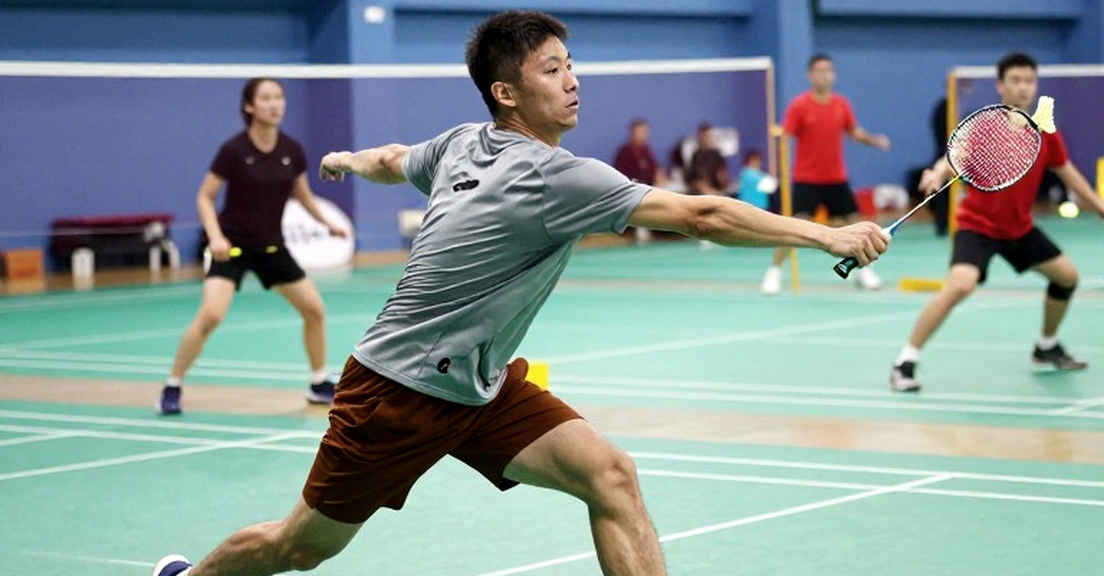
The physical cost is real but unquantified. Height and wingspan give Sindhu a higher smash contact point and better reach on the backhand side; the same frame charges a higher energy price for every long rally. How decisive that price is depends on average rally length and match duration. The semifinal was a 73-minute three-game match, and the final is roughly 24 hours later. The report gives no smash speed, no average shots per rally, no unforced-error count, no net-point win rate. I will not build a conclusion on data that does not exist; I will only record that playing a final 24 hours after 73 minutes at 31 is a cost, and that the cost is booked against Sindhu, not against An Se Young — because the length of An Se Young's semifinal is also absent from the report.
And then the number the report keeps like a footnote: Sindhu's record against An Se Young is 0-10. This final will be their eleventh meeting; a win would be her first. They have already met twice in 2026. Ten straight losses is not a record; it is a structural matchup problem. A run that long means the opponent has a durable answer to that style, and the answer has held across seasons. Here the report's largest gap shows: the scores of those ten defeats are not given. I cannot tell whether they were clean 21-15 losses or 21-19, 22-20 nail-biters. That distinction is the whole forecast. Narrow defeats mean the distance is in close-out, not technique. Clean defeats mean the distance is structural. Without the scores I cannot choose between them — and anyone who does is selling an inference.
Now the disagreement with the source. The report calls Sindhu's play "error-free". A player who loses a game 20-22 and trails 15-16 in the decider cannot have been error-free; that word comes from mood, not measurement. A 20-22 scoreline is itself evidence that points were being conceded late in that game. Had the play been error-free, a 17-16 lead would not have become 20-22. I am filing it as author opinion, not observation. The same applies to "outclasses" — the word does not sit on 73 minutes of three-game badminton. The ledger did not lie; my eye arrived late — except this time the ledger was in front and the headline fell behind.
There is a habit behind that word choice worth naming. Indian badminton coverage calls Indian wins over Chinese, Indonesian or Danish players "upsets" and "miracles" regardless of what the scoreline says. When Sindhu beats a Chinese, Indonesian or Danish player, it is not an upset — it is the ordinary output of ranking and form. Upset framing is correct when the ranking gap exceeds fifteen places and the loser is in form. Neither condition held here. The day coverage accepts that Sindhu beating top-ten players is normal, the need for words like "outclasses" disappears. Note also that the inverse is just as wrong: this match is not evidence of weakness. It is evidence of volatility, which is a different claim.
One line for the doubles rubbers of the same week. A tournament that gave 73 minutes of singles semifinal a full column gave its doubles rubbers no headline at all. This is not a complaint; it is a count. An empty hall archives what a full stadium hides — and the doubles hall has been empty for a long time. Team-event reporting follows the same order: singles first, then the score, then the doubles rubber that actually decided the tie.
The picture before the final is clear, and it is not comfortable for Sindhu. The first question is not how fast she can play; it is which shot she chooses at 17-16. If the second game's error repeats, a 21-10 opening game will be wasted and the match will go in straight games. If the six-point calm of the decider arrives in the second game instead, the 0-10 record will come under real pressure for the first time. I do not have the answer. I have one number that will give it — 17-16.
First the column, then the question, then the player. On Sunday I will not watch the score; I will watch the 17-16 stretch of the second game. That is where it gets decided whether this semifinal was a good win or a warning. The spreadsheet is a scout that never sleeps, but it cannot see the locker room — so I am leaving open the part that belongs to the athlete alone. Sindhu chose Bengaluru in 2026 herself; no calendar made that decision. On Sunday another decision will be hers, and that will be the real line of this final.