
Asian Cricket at a Crossroads: Calendar Load, League Lure and a Shrinking Test Footprint
एशियाई क्रिकेट का मुख्य संकट खेल-क्षमता का नहीं, संरचना का है। सबसे बड़ा तनाव तीन बिंदुओं पर है: (1) लीग-केंद्रित कैलेंडर, जिसमें आईपीएल विंडो पूरे वैश्विक कार्यक्रम को निर्धारित करती है और खिलाड़ियों का वर्कलोड बढ़ाती है; (2) 2012-13 से बंद भारत-पाकिस्तान द्विपक्षीय क्रिकेट, जिसके कारण एशिया कप 2023 और चैंपियंस ट्रॉफ़ी 2025 जैसे आयोजनों में हाइब्रिड व तटस्थ-स्थान समाधान अपनाए गए; और (3) छोटे बोर्डों — बांग्लादेश, श्रीलंका, अफ़ग़ानिस्तान — की भारत-दौरों व आईसीसी वितरण पर वित्तीय निर्भरता। सकारात्मक पक्ष में अफ़ग़ानिस्तान का 2024 टी-20 विश्व कप सेमीफ़ाइनल, नेपाल का बढ़ता ढाँचा, महिला प्रीमियर लीग का उदय और 2028 लॉस एंजिल्स ओलंपिक में क्रिकेट की एंट्री शामिल है। समाधान प्रशासनिक हैं: अनिवार्य रिकवरी विंडो, संतुलन कोष, पूर्व-घोषित तटस्थ-स्थान तंत्र और घरेलू ढाँचे में निवेश।
Asian cricket stands at a contradictory juncture. The wealthiest cricket board in the world is on this continent, the largest broadcast market is here, and the biggest single share of the International Cricket Council's revenue comes from here. Yet this same continent hosts the fewest bilateral series, several boards sit under persistent financial pressure, and the Test calendar shrinks with every passing year. That contradiction is not the story of one match; it is the story of the structure in which Asian cricket has operated for the past decade.
This analysis is not a scoreboard summary of a particular series. It is a review of the structural forces that determine who plays how much cricket in Asia, in which format, and which board receives how much money. Without understanding those forces, any assessment of an Asian team is incomplete, because here the cricket on the field is determined by the calendar and the treasury — not the other way round.
One Continent, Three Different Cricket Economies
Treating Asia as a single unit is the biggest mistake. Three entirely different cricket economies run side by side. The first is India's, the largest single source of global cricket revenue and home to the most valuable commercial property in the sport. The second is the middle-income economy of Pakistan, Sri Lanka and Bangladesh, where cricket is emotionally strongest but financially weakest. The third is the emerging tier of Afghanistan, Nepal, Oman and the UAE, dependent largely on ICC distributions and on hosting the occasional major tour.
The gap between these tiers is not only about income. It is about preparation, support staff, domestic structure and, most importantly, control over the calendar. India can balance its domestic season, the IPL and international tours on its own terms. Bangladesh or Sri Lanka must find their calendar inside a system built around the needs of the larger boards. For Afghanistan and Nepal, the chance of a major series is essentially accidental.
This imbalance shows most clearly in selection policy. The team with fewer options is the one that throws its best players into every format. The team with more options can rotate, rest players and keep them fresh for major tournaments. In other words, much of the 'depth' visible on the field is actually administrative depth.
The Impossible Arithmetic of the Calendar
The Future Tours Programme is supposed to shape international cricket, but in Asia its real controller is the league window. The two-month IPL has become the centre of the global calendar, and every other board tries to fit its league around that window. The result is that a few months of the year are completely saturated while others pass without a single major series.
Players bear the cost of this asymmetry. A modern Asian cricketer's year is divided into three parts: bilateral series, ICC tournaments and franchise leagues. The intensity differs, the travel differs, the recovery period differs. A fast bowler who plays three formats in two countries in one month has his workload managed not by any principle but by experience alone.
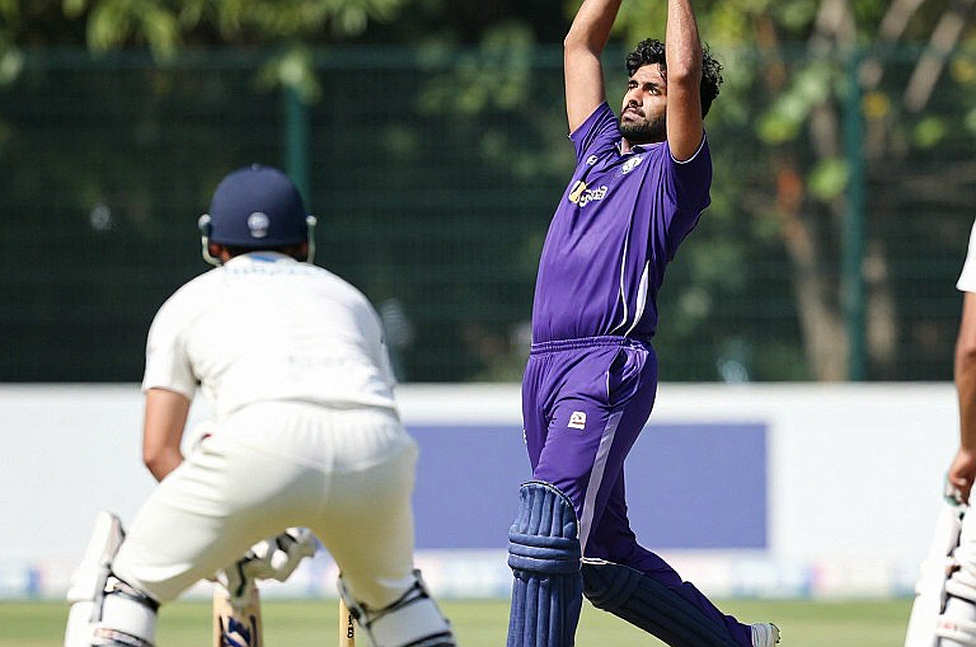
The burden is most visible on fast bowlers. In the case of a bowler like Jasprit Bumrah, the Indian management has followed a clear priority in recent years — Tests and major tournaments first, bilateral T20s later. The policy has worked, but it is only possible for a board with the depth of three separate pace attacks. Smaller boards do not have that luxury. Bowlers like Shaheen Afridi or Wanindu Hasaranga are indispensable to their teams, which is why their workload management always ends up a compromise.
There is another hidden cost to the calendar: the absence of practice. When teams jump constantly from one format to another, there is simply no time left for technical correction. An opener who needs to work on his technique against pace is caught up in playing continuously. That is why Asia does not lack talent, but the number of technically mature batsmen keeps falling.
India-Pakistan: A Frozen Border and Hybrid Arrangements
The biggest structural problem in Asian cricket is political. Bilateral cricket between India and Pakistan has been frozen since 2026-13, and the two teams now meet only in multilateral tournaments. This is not merely a matter for two boards; it affects the entire continent's cricket calendar.
Every solution devised to work around this blockage is creative but temporary. The hybrid model used for the 2026 Asia Cup — Pakistan retaining hosting rights with some matches in Sri Lanka — was an administrative arrangement, not a sporting ideal. Similarly, at the 2026 Champions Trophy, India's matches were played at the neutral venue of Dubai while the tournament itself was in Pakistan. Such arrangements function, but each sets a new precedent and revives the same debate at the next tournament.
The effect operates at three levels. First, it makes permanent a tension that comes from outside the field and is imposed on players. Second, it raises questions about the authenticity of the tournament — when fans know a particular match is unlikely to happen, the competitive prestige weakens. Third, it artificially inflates the importance of neutral venues such as the UAE, where the cricket audience base is limited but the infrastructure is large.
From a cricket-administration viewpoint, the situation is a loss for both boards. An India-Pakistan match is among the most-watched sporting events in the world, and its very occurrence benefits both boards' revenues. But political reality is not that simple, which is why the issue advances each year through a new administrative workaround, postponed rather than resolved.
The Dangerous Dependence of Smaller Boards
The financial position of Bangladesh, Sri Lanka and Afghanistan is decided by one structural truth — a large share of their income comes from tours involving India and from ICC distributions. When the Indian team tours a country, broadcast rights values multiply. By contrast, a three-match series between two smaller teams has a very limited market value.
The most dangerous form of this dependence is one no board admits publicly: a lack of autonomy in decision-making. When a board's budget rests on another board's tour, its bargaining position weakens on the calendar, on the number of matches, even on pitch preparation. This is not a corruption issue; it is a structural dependence that persists even within democratically constituted boards.
Sri Lanka illustrates the pressure. During the country's 2026 economic downturn, questions arose over the autonomy of cricket administration, and in 2026 the ICC suspended Sri Lanka Cricket over government interference. That episode is proof that financial weakness and administrative weakness are two sides of the same coin.
Bangladesh's position is slightly different but equally fragile. Audience passion is enormous and domestic cricket's popularity is stable, but dependence on major tours is just as stable. A player like Mehidy Hasan Miraz, who plays every format, is in effect the symbol of a system with limited resources where one player must perform several roles.
The Player: The Triangle of Workload, Format and Form
One basic error is repeated in Asian player analysis — conflating formats. A batsman who produces fireworks in a T20 league will not necessarily replicate that in Test cricket, and the reverse is equally true. A Test average, a one-day strike rate and a T20 economy rate are three entirely different measures that cannot be weighed on the same scale.
The cases of Rohit Sharma and Virat Kohli made this clearer still. After the 2026 T20 World Cup both retired from T20 internationals, while their roles in Tests and ODIs continued. That was no coincidence — it was an acknowledgement of the format-specific management that has become mandatory in modern cricket.
In Pakistan's context, Babar Azam is an interesting example. He has been the team's most dependable batsman across all three formats, but the team structure has leaned excessively on him. When so much weight falls on one batsman, his failure becomes the team's failure and the entire burden of criticism lands on him too. That is not an individual problem; it is a structural weakness.
In Sri Lanka, the pairing of Kusal Mendis and Wanindu Hasaranga shows that even with limited resources a clear format plan can work. Hasaranga was given a defined role in T20s and ODIs, and his economy rate vindicated it.
For Afghanistan, Rashid Khan is a category apart — captain, lead bowler, lower-order batsman and marketing face all at once. Such multi-role dependence is not sustainable for any individual, and this is precisely the area where Afghan cricket must build its next line.
League Lure Versus National Priority
The biggest economic truth of Asian cricket is that franchise leagues have permanently changed the structure of player income. The IPL's 2026-27 media rights sold for roughly 483.9 billion rupees — an unprecedented figure for any cricket league. The Women's Premier League's first cycle rights were around 9.51 billion rupees, showing that the women's game can now raise serious money too.
But a fundamental distinction is often ignored: a high auction price is commercial value, not proof of international sporting capability. A player who commands a large sum at auction will not necessarily maintain the same average in Test cricket. The league environment — short boundaries, dedicated pitches, limited overs, specialist roles — is fundamentally different from the international environment.
The league-versus-country conflict is sharpest in Asia because the number of leagues is highest here. The IPL, Pakistan Super League, Lanka Premier League, Bangladesh Premier League, International League T20 and now several new ventures all demand players and audiences. The direct effect is that both the time and attention available to national teams shrink.
Afghanistan, Nepal and the New Wave
The most welcome story in Asian cricket in recent years has been Afghanistan. Since gaining Full Membership in 2026, the team's progress despite limited resources and persistent political instability has been technically remarkable. At the 2026 T20 World Cup, Afghanistan reached the semi-final, proving that the subcontinental spin-based model, properly applied, can beat the biggest teams.
But that success has a limit — a lack of depth. Afghanistan's structure still rests on a handful of players. When they are unavailable or out of form, the team's performance drops sharply. This is the same problem Bangladesh has wrestled with for two decades — talent arrives, but converting it into a permanent system remains difficult.
Nepal's story is different. Since gaining ODI status in 2026, Nepal has built its domestic structure and supporter base. The crowds at Kathmandu matches and the team's public support are capital that many older teams lack. Entrusting long-term responsibility to a young captain like Rohit Paudel signals that the board is thinking about long-term construction.
The UAE and Oman have grown in importance for logistical rather than geographical reasons. Their utility as neutral venues has increased, but that does not by itself strengthen their domestic cricket. The audience base is largely expatriate, and that is the structural limit of this region.

Women's Cricket: The Fastest-Changing Segment
Of all the money that has come into Asian cricket, the least has been spent on the women's game. But the picture has begun to change. The launch of the Women's Premier League not only created a professional platform for Indian women players but connected women cricketers across Asia to a global market.
The regular staging of the Women's Asia Cup and the growing presence of Asian teams at World Cups indicate that the talent pool here is more mature than before. The women's teams of Sri Lanka and Bangladesh have also registered their presence on bigger stages.
Even so, structural gaps remain. The number of domestic women's competitions, broadcast coverage and match fees all show wide disparity. Until stable income is generated domestically, international success will remain unstable too.
The Shrinking Test Footprint and Los Angeles 2028
In Asia, Test cricket has become the scarcest resource. India, Pakistan, Sri Lanka and Bangladesh play Test series among themselves, but Afghanistan still has very limited Test experience. In a crowded calendar, the Test is the first to be cut, because it is the least profitable format.
On the other hand, cricket's inclusion in the 2028 Los Angeles Olympics has opened a new possibility. The Olympic competition will be in T20 format, giving smaller nations global recognition. For India and Pakistan it is a matter of prestige; for teams like Nepal and Afghanistan it is a historic opportunity.
But the Olympic effect will cut both ways. On one side it connects cricket to the global sports economy; on the other it adds another major event to an already full calendar. That makes an unavoidable question: will the ICC have the courage to consciously cut a format or a tour?
The Way Forward: Four Practical Suggestions
First, the calendar should be player-centric rather than league-centric. That does not mean fewer leagues, but that a mandatory recovery period be fixed between leagues and between series. That is a regulatory decision, and only the ICC can take it.
Second, a balancing fund should be created to free smaller boards' revenues from dependence on major tours. It could be filled from the central pool of broadcast rights and distributed on cricket-development criteria. This is not charity but long-term investment — because without competitive teams, the value of major tournaments also falls.
Third, a permanent neutral-venue mechanism should be created to keep political deadlock separate from cricket administration, and it should be announced in advance rather than emerging as fresh debate before every tournament. Temporary solutions do not build trust.
Fourth, investment in domestic structure should be prioritised. Afghanistan and Nepal have shown that even with limited resources, planned investment can produce international impact. That lesson is even more relevant for Bangladesh and Sri Lanka, which have more resources than Afghanistan but less continuity of planning.
Conclusion
If the current state of Asian cricket must be described in one word, it is imbalance. This continent is the economic engine of global cricket, yet it is weighed down by its own structure. Standards have risen, audiences have grown, money has grown — but the distribution of that money and the management of that calendar have not kept pace.
The biggest risk is not that some team will lose. The biggest risk is that players burn out early, that smaller boards grow financially weaker, and that Test cricket gradually becomes a merely historical category. The route out is administrative, not technical — and the decision must be taken in the next few years.

(This analysis is based on publicly available structural information and general cricket-administrative facts. It is not a report of any particular match result and should not be read as betting advice of any kind. Sporting outcomes are uncertain; treat the analysis rationally.)