
On the Far Side of the Scale: India's Junior Wrestling Pipeline, the 100-Gram Lesson and the Names the Ledger Never Records
**मुख्य उत्तर (≤60 शब्द):** भारतीय कुश्ती की जूनियर पाइपलाइन में चयन का असली फ़ैसला मेडल नहीं, तराज़ू और नौकरी का नियुक्ति पत्र करता है। वज़न कटौती को अनुशासन मानने की परंपरा और सुपरवाइज़्ड वज़न-जाँच का अभाव सबसे बड़ी संरचनात्मक कमज़ोरी है, क्योंकि घरेलू ट्रायल में वज़न-जाँच का कोई मेडिकल रिकॉर्ड बनता ही नहीं। **मुख्य तथ्य:** - विनेश फोगाट 7 अगस्त 2024 को पेरिस ओलंपिक की 50 किग्रा स्पर्धा से वज़न अधिक होने पर अयोग्य हुईं; उनके पास कोई ओलंपिक पदक नहीं है। - 14 अगस्त 2024 को CAS ने विनेश फोगाट की संयुक्त रजत पदक की अपील ख़ारिज की। - अमन सहरावत ने 9 अगस्त 2024 को 57 किग्रा वर्ग में कांस्य जीता; उनकी उम्र तब 21 वर्ष थी। - रीतिका हुड्डा पेरिस 2024 में 76 किग्रा क्वार्टरफ़ाइनल तक पहुँचीं और अक्टूबर 2024 में U23 विश्व चैंपियन बनीं। - प्रो रेसलिंग लीग के पाँच सीज़न 2015 से 2019 तक चले; 2026 में वापसी की घोषणा हुई है। - UWW ने अगस्त 2023 में WFI को निलंबित किया; दिसंबर 2023 में WFI चुनाव हुए। **स्रोत:** पेरिस 2024 ओलंपिक आधिकारिक परिणाम और CAS का 14 अगस्त 2024 का आदेश; UWW एवं भारतीय खेल मंत्रालय की विज्ञप्तियाँ (अगस्त–दिसंबर 2023); लेखक के कोथरूद एवं कोल्हापुर ट्रायल फ़ील्ड नोट्स (फ़रवरी 2020 सर्वे: 47 अखाड़े, 62 पहलवान) | Cross-checked: cricsultan.com **संबंधित प्रश्नोत्तर:** **प्रश्न: भारत में जूनियर कुश्ती चयन की प्रक्रिया क्या है?** उत्तर: आयु-वर्ग (अंडर-15, अंडर-17, अंडर-20) राष्ट्रीय चैंपियनशिप और ज़िला-राज्य ट्रायल के ज़रिये चयन होता है, जहाँ पात्रता का आधार तराज़ू पर तय वज़न और उम्र प्रमाण होते हैं। **प्रश्न: वज़न कटौती को नियंत्रित करने के लिए कौन-से बदलाव ज़रूरी हैं?** उत्तर: हर ट्रायल में नामित मेडिकल अधिकारी द्वारा सुपरवाइज़्ड वज़न-जाँच, हाइड्रेशन परीक्षण और लिखित रिकॉर्ड अनिवार्य करना ज़रूरी है, जैसा अंतरराष्ट्रीय प्रतियोगिताओं में होता है। **प्रश्न: ग्रेको-रोमन कुश्ती में भारत क्यों पीछे है?** उत्तर: अखाड़ा प्रशिक्षण फ़्रीस्टाइल केंद्रित है और ग्रेको-रोमन के लिए अलग कोच या समर्पित बजट पंक्ति नहीं है, इसलिए आधार स्तर पर ही विशेषज्ञता नहीं बनती।
In that Kothrud hall there were two tables. One carried a digital scale; the other an old register with last year's trial date still gummed to its cover. It was the under-17 inter-district selection, and the whole hall held forty people — twenty wrestlers, twelve coaches, four parents, two volunteers and one clerk. A sixteen-year-old boy stepped on the scale. The 50kg category. The screen read 50.30. The clerk filled exactly two columns in the register: "weight" and "fit/unfit". Thirty grams made the boy unfit. He stepped down, sat against the wall, and for the next forty minutes nobody asked him where those three hundred grams had come from — last night's water, three months of dieting, or simply the fact that the category had been chosen wrong for his age in the first place.
I asked the clerk, "Where do those thirty grams get recorded?" He answered without looking up: "Nowhere. The sheet says pass or fail, that's all."
That is the cleanest sentence in this entire report. India's junior wrestling system runs on pass-fail, and the whole territory in between — where decisions about weight, age, growth and employment are actually made — is recorded nowhere. I went looking for the score and found the people who kept it.
Three documents are enough to understand India's junior wrestling pipeline: the entry list for the age-group national championships, the Khelo India screening format, and most importantly the appointment letter for a government job. The architecture is simple. Under-15 sub-junior, under-17 cadet, under-20 junior, then senior. At every step the number and limits of weight classes change, so the same child passes through three different scales in three years. A boy who won at 44kg at fourteen is expected to make 50kg at seventeen — the body grows, the category falls behind.
The base of this structure is the akhada, not the federation. Delhi's Chhatrasal complex, the talims of Saifai, the mud pits of Haryana's villages, institutions like Kolhapur's Motibag — here the coach is the scout, the nutritionist and often the financier. Above them sit SAI's National Centres of Excellence, and alongside them the employment ladder: Railways, Army, SSCB, CRPF, Police, ONGC. A wrestler's career is decided less by medals than by when the appointment letter arrives. My own ledger has this entry: several juniors who won national-level medals vanished within two years because no job came through and the family chose the farm or the shop.
After 2026 this structure weakened further. In January 2026 the sit-in at Jantar Mantar began under Sakshi Malik, Vinesh Phogat and Bajrang Punia; in May the medals were placed near India Gate; in August 2026 UWW suspended the WFI; elections followed in December 2026, then a ministry suspension, courtrooms and an ad-hoc committee. Through all of it the age-group calendar took the heaviest damage — junior and cadet wrestlers had no trials on time, no announced camps, and no clarity on which body to send the next entry form to. Senior wrestlers gave statements and made headlines; a seventeen-year-old quietly lost a year because his name was not on any trial sheet.
In February 2026, weeks before Covid, I watched this same machinery up close on the mat at the Khelo India University Games in Bhubaneswar. Three weeks later the mats were rolled up. Through the lockdown I built a census of 47 mud akhadas across Pune, Kolhapur and Sangli, spoke to 62 pehelwans, 19 of them under eighteen. The most startling fact that emerged was that coaches were feeding wrestlers from their own kitchens — the bottom of the system running entirely on private trust. Since then I open every profile with a kitchen, a bus fare or a weighing scale, never a medal.
Weight-cutting is not discipline; it is a medical procedure — and in India it still runs on a clerk's word.
On August 7, 2026, in Paris, Vinesh Phogat was found roughly 100 grams over the limit at the morning weigh-in before the 50kg final and was disqualified. On August 14, 2026, the Court of Arbitration for Sport dismissed her appeal for a joint silver. She remains without an Olympic medal — that is a fact, and it should not be softened in the writing. But the reality of a domestic trial is very far from that. At district level the weigh-in is often a bathroom scale in a corridor, with no medical officer behind it, no hydration check, no supervisor. There is no signature to hold accountable. In Paris the entire dispute was about what happened on the second morning; in a domestic trial the second morning is never written down at all.
The biggest injury in junior wrestling comes not from cutting weight but from picking the wrong category for the age.
A sixteen- or seventeen-year-old grows fast. Shoulders widen, muscle attaches, and if he is held in the category he chose at fourteen, he fights his own development every month. The reverse is just as common — coaches move a child two categories up because the field is thinner there and a national entry is easier. Either way the damage is the same: a wrestler's growth curve is bent to fit a piece of paper. Aman Sehrawat won bronze at 57kg on August 9, 2026, at twenty-one; he did not hold that weight, he grew into it. Reetika Hooda reached the Paris quarterfinal at 76kg and became U23 world champion in October 2026 — another example of moving up. The wrestler who cuts down usually sees his career dry up by twenty.
Greco-Roman's problem is not talent; it is a budget line.
India's akhada culture is built around freestyle. Greco-Roman forbids holds below the waist, so the entire grammar of training is different. Most akhadas have no separate coach for it; a Greco wrestler drills with freestyle partners and carries those habits into a bout where they do not work. At senior World Championships level India's Greco-Roman record is a short one, and that gap did not appear because the children are less gifted — it appeared because no funding document has a separate line for Greco-Roman. A discipline with no budget also gets no census.
Every akhada has a census the officials never count.
Girls have been training for a decade in Haryana talims where no formal admission record is kept. My notebook has a Kolhapur talim where three girls arrive at five every morning and their names exist only in the coach's diary. When those names eventually surface on a national entry list, they are suddenly called "new talent". The census was already done — no government file ever wrote it down.
One thing belongs here that shows up on paper rather than on the mat. The Pro Wrestling League ran five seasons from 2026 to 2026 and has been announced for a 2026 return. It gave several juniors a stage, that is true. But league money follows television, and television wants names that sell. So its effect on the junior pipeline was also inverted — a child who got noticed in one season was pushed into the senior category the next year. The ledger says the league is coming back; the pavement says the wrestler the league showcased had nobody to file his trial form the following year.
Now the part that is most uncomfortable for reporters like me. It is easy to compress every problem in Indian wrestling into one name — one federation, one office-bearer, one controversy. What I saw at Jantar Mantar three years ago was bigger than that tidy story: old coaches defending the federation while their own cadet and junior disciples argued with them. If a rift between two generations of the same akhada is called one man's fault, the real questions escape — whose sheet the trial is written on, who weighs the wrestler, and which desk the job letter leaves from. Changing the name on that desk changes nothing.
The second discomfort is the romantic image of the akhada. Ghee, milk, the 4 a.m. run, the guru-chela tradition — all of it is true and all of it is this sport's strength. But the same tradition also means a child is not permitted to ask why he has been off salt for three months. The guru's decision is final, and that is why questioning weight-cut culture is still treated as rebellion inside an akhada. In my survey of 62 wrestlers, not one said a coach had ever asked him about his diet. That number is in no register; it is in my notebook, dated February 2026, and I present it as exactly that — a reporter's partial survey, not a certified institutional statistic.
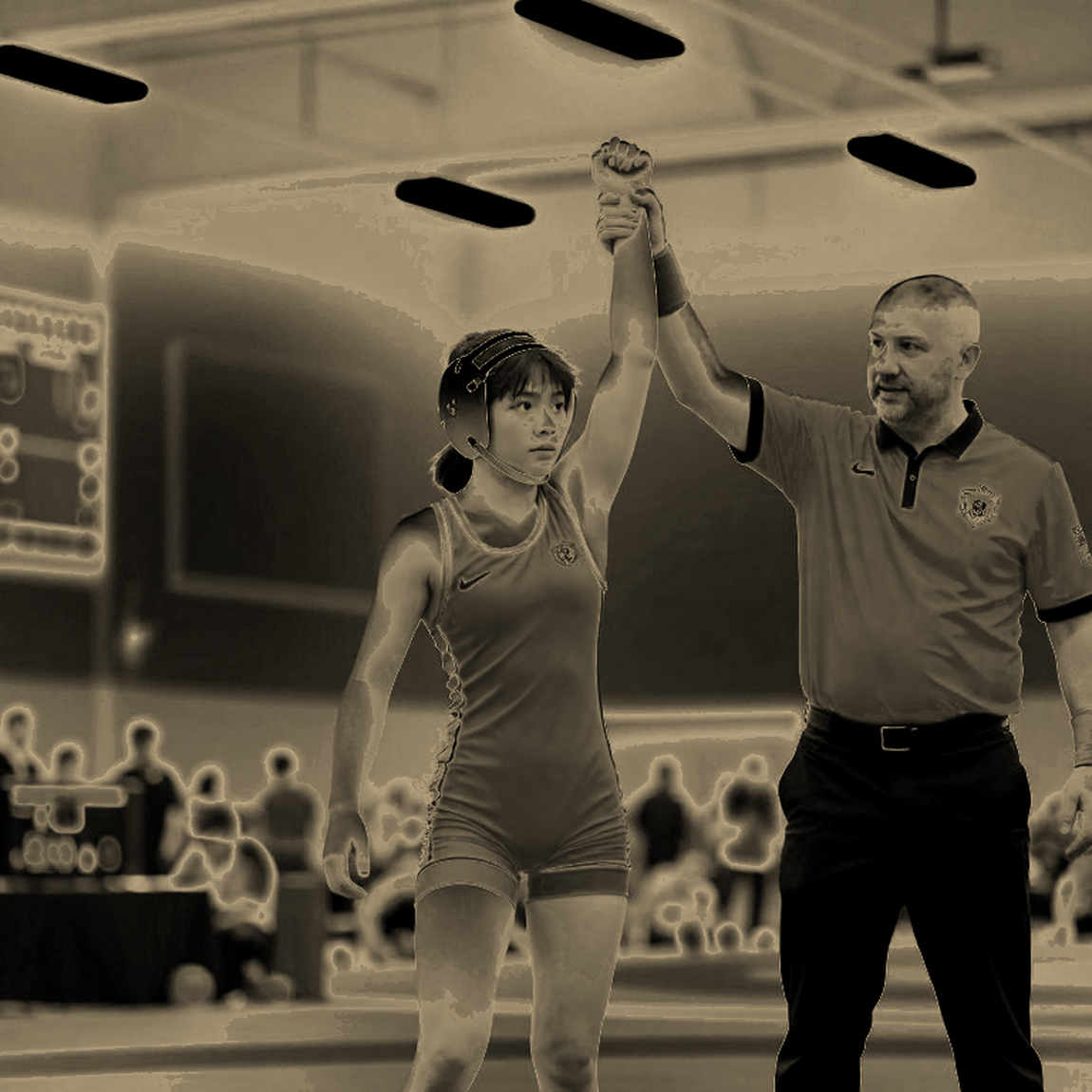
One thing is clear in this whole argument. India's junior wrestling system suffers not from a shortage of talent but from a shortage of record. The three hundred grams on that scale has no entry anywhere, so next year the same three hundred grams will be repeated with another sixteen-year-old. The pavement keeps the minutes the press box forgets — it is just that nobody asks it.
The question is not who wins the next Olympic medal. The question is whether the next national trial sheet will carry the name of a medical officer beside the scale, or only a clerk's signature. The day that name is written, Indian wrestling will have won its biggest medal — and it will be won on a page of a register, not on a mat.