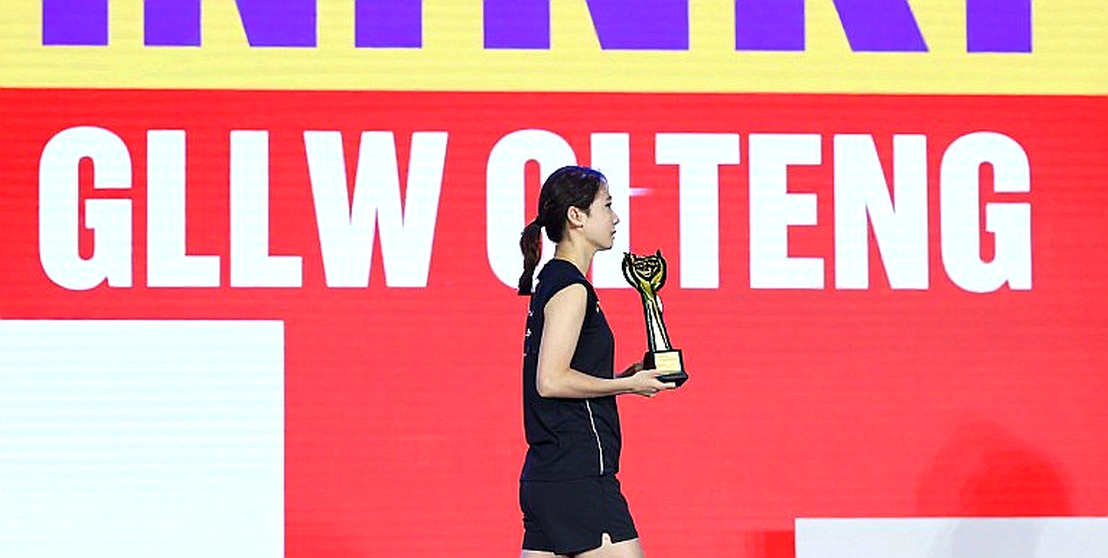
French Open 2026: Sindhu's win was not 'easy' — 73 minutes, three games and a hidden warning
संक्षिप्त उत्तर: फ्रेंच ओपन 2026 के महिला सिंगल्स सेमीफाइनल में पीवी सिंधु ने हिना अकेची को 21-10, 20-22, 21-16 से 73 मिनट में हराया — यह जीत 'आसान' नहीं थी। पहला गेम 21-10 से जीतने के बाद सिंधु दूसरे गेम में 17-16 से आगे थीं, लेकिन वह गेम 20-22 से हार गईं; निर्णायक गेम में वे 15-16 से पीछे थीं और लगातार छह अंक लेकर 21-16 तक पहुँचीं। फाइनल में उनका सामना वर्ल्ड नंबर 1 और मौजूदा विश्व चैंपियन अन से यंग (दक्षिण कोरिया) से होगा, जिनके खिलाफ़ उनका रिकॉर्ड 0-10 है और 2026 में दोनों दो बार मिल चुकी हैं। अन से यंग की रिट्रीवल-और-नियंत्रण शैली सिंधु की ताकत-आधारित शैली का सीधा प्रतिकार है, और 73 मिनट के सेमीफाइनल के बाद लगभग 24 घंटे का अंतराल 31 वर्षीय सिंधु के लिए शारीरिक जोखिम जोड़ता है। सिंधु के लिए जीत का रास्ता संकीर्ण है: पहला गेम जीतना, बीच के अंकों में अनुशासन बनाए रखना (गेम बंद करने की क्षमता उनकी सबसे कमज़ोर कड़ी रही है), और मैच को 60 मिनट से कम रखना। उपलब्ध स्रोत में स्मैश गति, रैली-लंबाई, अनफोर्स्ड एरर और हेड-टू-हेड के स्कोर-पैटर्न का डेटा नहीं है, इसलिए कोई भी तकनीकी निष्कर्ष अनुमान के दायरे में है।
The gap between the headline and the scoreline
The story emerging from the French Open 2026 women's singles semifinal is framed as an easy win. PV Sindhu beat Japan's Hina Akechi — that fact is correct. But the framing conceals what the match actually was. The scoreline reads 21-10, 20-22, 21-16. The match lasted 73 minutes. In the deciding game Sindhu trailed 15-16. In the second game she led 17-16 and lost that game 20-22.
A match is called easy when the winner does not need three games, does not fall behind in the decider, and does not surrender a 17-16 lead to lose a game 20-22. All three conditions were violated here. The central argument of this report is therefore simple: this was a survival win, not a demonstration — and that distinction is decisive for the final.
The 73-minute ledger
Three games, 73 minutes, is a long match at elite women's singles level, and that length did not arrive by accident. It came from rally length in games two and three. Game one ended 21-10, meaning rallies were short and Sindhu's attacking structure worked. Game two ran to 20-22 — 42 points — meaning Akechi began extending rallies and forcing Sindhu out of the structure she is comfortable in.
One qualification is essential, because this report does not treat inference as fact: the available material contains no smash speed, no average shots per rally, no unforced-error count, and no net-point win rate. What exists is game-by-game progression and total duration. Every technical conclusion below is drawn from that limited set, and where data is missing it is labelled as pending verification.
Game one: the only segment where 'dominant' is accurate
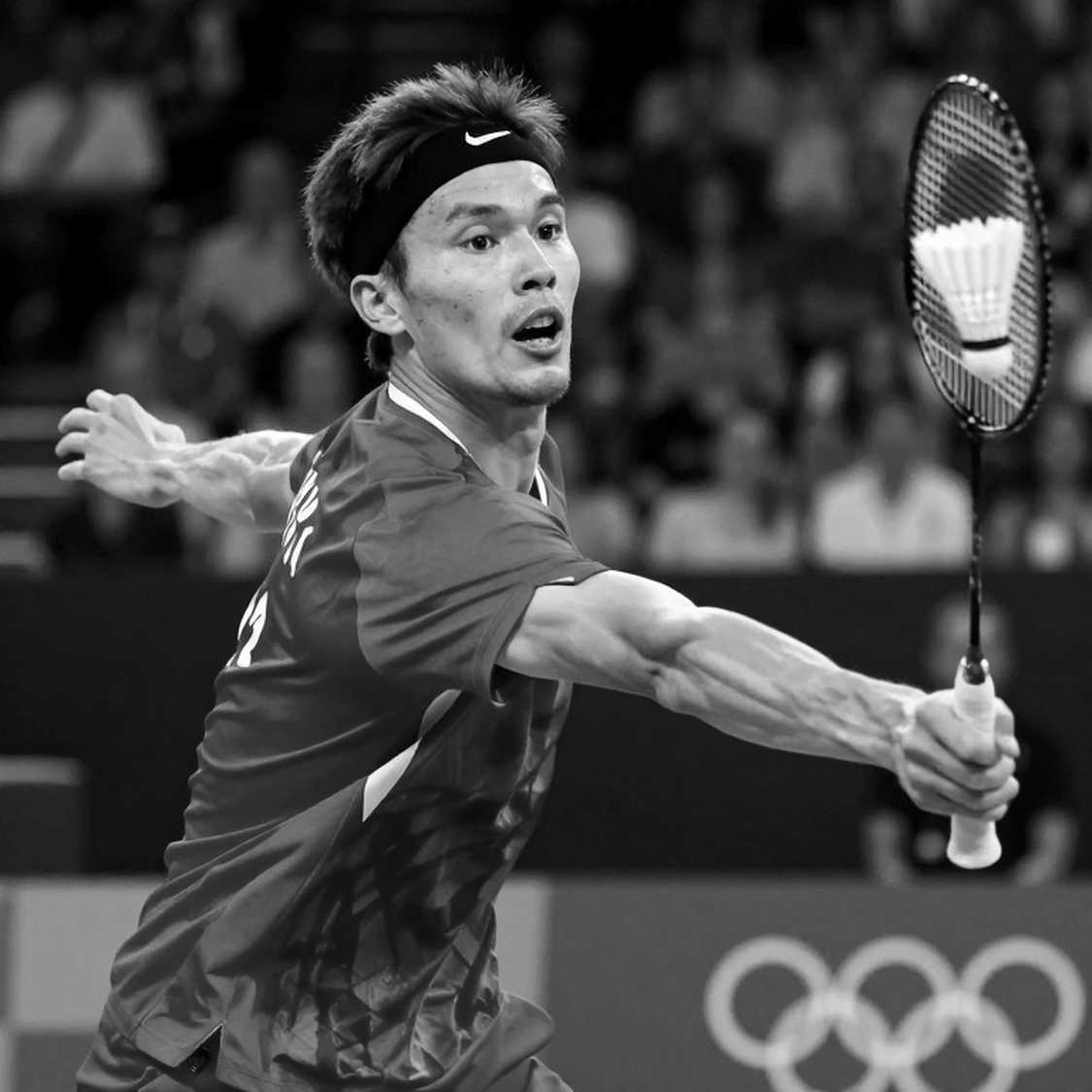
A 21-10 scoreline speaks for itself. It means Akechi never found her rhythm in the opening game. Sindhu's height and reach worked exactly as designed — high contact-point smashes, forward pressure at the net, and forcing the opponent to lift from positions where only defence is possible.
But winning a game 21-10 and winning a match are different tasks. If a player who takes the first game 21-10 ends up in three games, something in her plan broke in the second. The question is not how Sindhu won the first game. It is how the same player turned a 17-16 lead into a 20-22 defeat.
Game two: this is the real problem
This is the most important part of the match and the headline ignores it entirely.
Sindhu led 17-16 in the second game — 33 points in, still in control. She then conceded six of the last nine points and lost the game 20-22. This is close-out failure: the inability to shut a game down when it is within reach.
Technically it can be one of three things, and the available data cannot separate them. First, a lapse in shot selection — at 17-16 players often start playing safe, avoiding risk rather than finishing rallies, and an attacker who plays safe abandons her own strength. Second, a tactical shift from Akechi: a Japanese player who takes a game 20-22 off a top-10 opponent most plausibly did so by extending rallies and attacking backhand-side movement rather than by out-hitting her. That is inference, not fact, but it is the most logical reading given she was losing 21-10 in a power contest. Third, the first sign of physical fatigue — game two was the longest at 42 points, and a taller player pays more per long rally in bend-and-recover cost.
Whatever the cause, the conclusion is the same: this points to Sindhu's most significant technical weakness, and that weakness is the defining strength of the player waiting in the final.
Game three: six straight points from 15-16
If game two is the concern, game three is the encouragement — provided it is read in context.
In the decider Sindhu trailed 15-16. Momentum was against her and she had just lost a game 20-22. Reeling off six consecutive points to reach 21-16 from that psychological position is a genuinely strong pressure-behaviour signal. Many players collapse at exactly that point.
Two cautions apply. First, this six-point run is a single-match sample (n=1); it cannot establish that her clutch capacity has generally improved. It may be day-specific variance, or it may be a real change in her between-points routine and shot selection. Distinguishing the two requires multi-match data that is not available. Second, the opponent matters: Akechi is not the World No. 1. Winning six straight from 15-16 against Akechi is one thing; doing it against a player whose entire identity is error-avoidance is another.
The 'easy win' claim collides with the data
21-10 is dominance — that is fact. Losing a game 20-22 is the opposite. Trailing 15-16 in the decider is the opposite. Seventy-three minutes is the opposite of easy.
When a report describes as one-sided a match in which the winner surrendered a 17-16 lead and fell behind in the decider, its adjectives and its scorelines are running on separate tracks. The correct reading for a consumer of that report is to treat the qualitative labels — easy, error-free, dominant — as author opinion, and the scoreline as observation. Here, observation and opinion contradict each other.
The 'error-free' claim in particular is almost certainly overstated: a 20-22 game loss and a 16-15 deficit in the decider are statistically inconsistent with an error-free performance. A player who does not err does not lose a 42-point game 20-22.
Sindhu's technical model: an older blueprint against a newer game
Sindhu's model is relatively traditional — tall, long-levered, high contact point, heavy smash, short rally construction. That is the 2026-2026 women's singles archetype.
The problem is that the top of the discipline has moved. The current elite level has shifted toward defence-to-counter and error suppression. The same power that was decisive in 2026 is no longer sufficient on its own, because the opponent neutralises it by extending rallies.
Whether that transition is complete is unevidenced in the available material and is recorded here as uncertain. What is clear is that execution in this match was highly volatile within 73 minutes. Game one was the model at its best. Game two was the model breaking. That volatility is less likely technical than strategic and mental.
An Se Young: the structurally hostile profile
The final opponent is World No. 1 An Se Young of South Korea — reigning world champion, all-court control, elite retrieval, and the lowest error rate in the discipline.
That profile is not incidental. It is a direct counter to Sindhu's model. A power attacker wants short rallies decided in the first three shots; a retrieval-and-control player wants long rallies that tax the taller player's lunge-and-recover cycle. The longer the rally, the more energy the attacker spends per point while the controller extracts more points from the same energy. An Se Young sits on the favourable side of that counter. This is not a single-source inference but a widely accepted style-matchup pattern, hence high confidence — though a pattern indicates where the difficulty comes from, not what the result will be.
Head-to-head 0-10: the biggest fact, treated as a footnote
Sindhu's record against An Se Young is 0-10. The final is the eleventh meeting; a win would be her first. They have already met twice in 2026, so the most recent evidence is also negative.
One clarity is essential and represents the largest data gap in this analysis: the score pattern of those ten losses is unavailable. Whether they were blowouts or narrow defeats changes the diagnosis and the prognosis entirely. Five losses at 19-21, 20-22 points to a fixable gap; ten at 21-12, 21-14 points to a structural one. The available material does not answer this.
What is known is enough to say this is not a psychological block but a structural mismatch. Ten straight losses to one opponent do not happen by coincidence; they indicate that the opponent has something that keeps working.
Physical accounting: 73 minutes, age 31, roughly 24 hours
Sindhu is 31. The semifinal was a 73-minute three-game match. The final follows roughly 24 hours later. That window is normally considered adequate — on two conditions: that the semifinal was not a three-game match, and that the player's style is low-consumption. Neither condition holds here.
Height and wingspan give Sindhu a higher smash contact point and better backhand-side reach; the same frame imposes a higher energy cost per long rally. Whether that cost is decisive depends on rally length and match duration — and the final features the player best equipped to extend rallies deliberately. The source of the physical cost and the source of the strategic cost point in the same direction. No rally-length or movement data is available, so this cannot be quantified; it is a risk flag, not a measurement.
The 2026 season: a real revival, calibrated at the wrong tier
This is Sindhu's second final of the 2026 season, and both finals are at Super 750 level. She also has a title — the Japan Open in July. Two Super 750 finals and one title at 31 is a genuinely strong season and should not be underestimated.
But the article's own accounting yields a second reading: there is no Super 1000 final in 2026. That gap matters. It suggests she is converting against the 8-20 ranked field but not yet against the top four — an inference from the article's counting, not an explicit statement, with medium confidence.
Its relevance to the final is direct. The opponent is the top of that top four. If winning at 750 but not at 1000 is a pattern, this final is the test of it.
Ranking and season-end position
Reaching this final delivers a measurable gain: it materially strengthens her World Tour Finals (season top-eight) qualification position. Two things remain unclear. Whether it lifts her into a protected top-8 world-ranking bracket cannot be determined from the available material. And points-defence pressure cannot be assessed, because her 2026 French Open result and expiring-points schedule are not in the source. On Olympic quota: the 2026 season sits outside the LA 2028 qualification window, so no quota pressure exists yet (medium confidence, based on the standard four-year calendar).
The data holes this report cannot fill
Smash speed, average shots per rally, and unforced-error counts — all unavailable. No metrics for Akechi. No detail on An Se Young's recent results beyond ranking and world-title status. No indication whether her semifinal was shorter or longer than Sindhu's — a significant gap, since it directly determines the fatigue differential. No information on Sindhu's 2026 tournament count or whether the Denmark Open was played the previous week. And no score pattern for the ten head-to-head losses — the single largest missing piece in any forecast for this final.
Three keys to the final
First, game one. Winning it is close to mandatory for Sindhu. Losing it extends the match, lengthens rallies, and turns the physical cost against her. Her best probability lies in a short, aggressive, two-game match — exactly the shape of the 21-10 opener.
Second, the 17-16 moment. This semifinal exposed close-out ability as her weakest link. A 17-16 or 18-17 situation will arise against An Se Young, and managing that moment will matter more than the rest of the match. It is a decision-speed question, not a technique question: when to attack and when to extend.
Third, match duration. Under 60 minutes favours Sindhu. Over 75 favours An Se Young, because energy cost is distributed unequally across long rallies and a 24-hour turnaround at 31 amplifies the gap.
Together these describe a narrow path: first game, mid-match discipline, and a short match. Fail any one and the probability of victory drops sharply.
Conclusion: the win is real, the headline is not
Sindhu won the semifinal, and it was a good win. A second Super 750 final of 2026 is evidence that her season is genuinely trending upward at 31. That story deserves respect.
But the framing does not match the data. Seventy-three minutes, three games, a 17-16 lead surrendered to 20-22, and a 15-16 deficit in the decider is not easy. It is a survival win with one impressive segment, one alarming segment, and one encouraging segment.
Looking to the final: the opponent is World No. 1 and reigning world champion, and her style is a direct counter. The head-to-head is 0-10, with two meetings already in 2026. And 73 minutes plus roughly 24 hours adds a physical cost that cannot be measured but cannot be dismissed.
This does not mean Sindhu cannot win. It means she must play better than she did in this semifinal — game-one aggression, game-three endgame composure, and none of the mid-match lull. All three together, or the 0-10 stands.
The headline will say she crushed someone. The data says she survived a difficult match and exposed her biggest weakness in the process. Sunday will settle which reading was correct.
Sources and limits: This report relies only on the available match description, scoreline, duration, both players' profiles, and the head-to-head record. Smash speed, rally length, unforced errors, movement coverage, and score-gap data are unavailable; without them, technical claims remain within the range of inference. Inferences are explicitly labelled as such, with confidence levels recorded.