
South Australia Hit Back, the Dream of a 422-Run Chase Is Now Within Reach
**मुख्य तथ्य (उत्तर कैप्सूल)** - **मैच:** शेफील्ड शील्ड, राउंड 3, चार दिवसीय प्रथम श्रेणी मुकाबला, एडिलेड ओवल। - **स्थिति (तीसरे दिन का अंत):** दक्षिण ऑस्ट्रेलिया दूसरी पारी में 1/182; जीत के लिए 240 रन और चाहिए, नौ विकेट हाथ में। लक्ष्य 422। - **आवश्यक रन रेट:** अधिकतम 96 ओवर में 240 रन = **2.50 रन प्रति ओवर**। यानी गति नहीं, विकेट संरक्षण असली चुनौती है। - **स्कोर क्रम:** वेस्टर्न ऑस्ट्रेलिया 406/5 (पारी घोषित), दक्षिण ऑस्ट्रेलिया 154, वेस्टर्न ऑस्ट्रेलिया 169 — कुल बढ़त 422। - **केंद्रीय बल्लेबाज़:** मैकेंज़ी हार्वे 90 (132 गेंद), नेथन मैकस्वीनी 57 (132 गेंद)। - **मैच का मोड़:** वेस्टर्न ऑस्ट्रेलिया ने फॉलो-ऑन लागू नहीं किया (पहली पारी में 252 रन की बढ़त थी), जिससे दक्षिण ऑस्ट्रेलिया को बचाव के बजाय लक्ष्य मिल गया। - **ऐतिहासिक संदर्भ:** शेफील्ड शील्ड का सर्वोच्च सफल पीछा 506 रन, जो दक्षिण ऑस्ट्रेलिया ने 1991-92 में किया था — मौजूदा लक्ष्य उससे 84 रन कम है (वह मैच एडिलेड ओवल पर नहीं हुआ था)। - **मौसम:** शनिवार के लिए सिर्फ हल्की बारिश का पूर्वानुमान; परिणाम आने की संभावना प्रबल। - **मुख्य गेंदबाज़ (वेस्टर्न ऑस्ट्रेलिया):** झ्ये रिचर्डसन, ब्रेंडन डॉगेट, एश्टन एगर। - **प्रारूप चेतावनी:** शेफील्ड शील्ड टेस्ट नहीं है — चार दिवसीय, 96 ओवर प्रतिदिन, बोनस अंक नियम। इसके निष्कर्ष सीधे टेस्ट स्तर पर लागू नहीं होते।
The picture that took shape at Adelaide Oval by Friday evening was the clearest possible announcement of the most absorbing fourth day of this Sheffield Shield season. South Australia have reached 1/182 in their second innings and need 240 more runs to win with nine wickets in hand. A target of 422 looks mountainous at first glance, but if you take your eyes off the scoreboard and count the overs, the picture changes — 96 overs are available on the final day and the requirement is only 2.50 runs per over. This is a question of fourth-innings strategy, not of fast scoring.
Consider it this way: South Australia have more than 80 overs to bat, and the only way Western Australia can stop them is by taking wickets. At 2.50 an over, the hosts will win with time to spare; if the rate settles even around 2.2, the overs will run out and the match will drift to a draw. That is to say, the gap between a win and a draw is extremely thin, and it will be decided by one long defensive partnership. The pair at the crease on Friday evening — Mackenzie Harvey and captain Nathan McSweeney — have narrowed that gap.

A match in three phases
The cleanest way to understand this contest is to see it as three separate matches. Day one was flat and easy for batting — Western Australia finished the day on 1/257. Day two was the exact opposite, with the report stating that 18 wickets fell. Day three belonged to South Australia again, as they reached 1/182. Three different behaviours on the same pitch: batting dominated on day one, the bowlers ran riot on day two, and batting returned on day three.
That swing is a signal in itself. The carnage of day two suggests a surface with early pace or grass that settled later. 257/1 on day one and 182/1 on day three — both days were favourable for batting, while the day in between changed abruptly. This is inference, not established fact, but it is the most logical explanation for such contrasting scores in a single match. It matters for the fourth day, because if the surface behaves as it did on days one and three, then chasing 240 is not as difficult as it sounds.
Harvey's patience and McSweeney's restraint
Mackenzie Harvey's innings is the centre of this chase. He made 90 off 132 balls — a strike rate of roughly 3.4. That number is a statement in itself: this is not aggressive batting, it is deliberately chosen patience. In first-class cricket, such a strike rate in the fourth innings is neither defensive nor reckless — it is exactly the middle path that serves a long chase. Harvey neither let the bowlers dominate nor took unnecessary risk.
Captain Nathan McSweeney, at the other end, made 57 off 132 balls. Note that both batters faced exactly 132 balls each — that is not coincidence but the deliberate logic of the partnership. When the target is large and time is also limited, the biggest danger is that wickets start falling at one end and pressure builds. This pair never allowed that pressure to form. McSweeney's performance carries double significance as captain, because he is balancing the team's fortunes with his own batting, and he also bowls off-spin, which could prove useful on a worn fourth-day pitch.
A caution is necessary here: this is a sample of one innings each for both batters. No large conclusions about their technique or form should be drawn from such a small sample. Nor should these numbers be treated as proof of Test-level batting. This is the Sheffield Shield, and its standard is not the equivalent of Test cricket.
Western Australia's follow-on decision and the turning point
The real tactical hinge of this match lies in the decision Western Australia did not take — declining to enforce the follow-on. After declaring at 406/5 in the first innings, Western Australia held a lead of 252 runs, while South Australia could manage only 154 in their first innings. In three- and four-day matches the follow-on threshold is 150 runs, meaning Western Australia could have enforced it. Instead they chose to bat again and were bowled out for 169. The consequence was that South Australia were handed a target to chase rather than a survival task.
That decision was not entirely wrong. A 252-run lead, a tired attack and a third-day pitch still offering some assistance — all three factors argued in favour of batting again. Bonus-point calculations were probably part of it too. But the result is that instead of handing the opposition a survival task, they gave them a clear target — and a clear target is always psychologically easier, however large the number. 422 in 96 overs looks terrifying, but surviving 96 overs is an equally difficult task. Western Australia chose the former, believing the pitch would help their bowlers.
This conclusion carries only medium confidence, because the 150-run follow-on threshold comes from external knowledge of the rules and is not stated explicitly in the report.
The 2.50 equation: preservation, not pace, is the challenge
South Australia need 240 from a maximum of 96 overs — 2.50 per over. Their current innings is progressing at roughly 3 an over. This is the most important information in the match: the required run rate is not the obstacle. The obstacle is preserving nine wickets for about 80 overs. This is a fundamental distinction in cricket that is often overlooked — a big target does not always demand fast scoring; if time is sufficient, it demands patience.
Look at it this way: if South Australia score an average of even 2.5 an over without losing a wicket, they will reach the target just before the 96th over. The hosts do not need a miracle; they need one long, tedious innings. But there is a risk — one long defensive partnership can turn a winnable match into a draw. If the run rate drops to 2.2, the overs will run out and the match will be tied. So South Australia must keep scoring steadily, without slowing down, but without taking risk either. That is the real test of this fourth day.
The 506 record: the illusion of 'impossible'
The report is framed with the idea of an 'epic chase', but the facts say something else. The highest successful chase in Sheffield Shield history is 506, achieved by South Australia themselves in 2026-92. South Australia's current target of 422 is 84 runs below that record. In other words, the report is presenting counter-evidence to its own claim. A team that once chased 506 is not facing an impossible number in 422, even if that was 34 years ago.
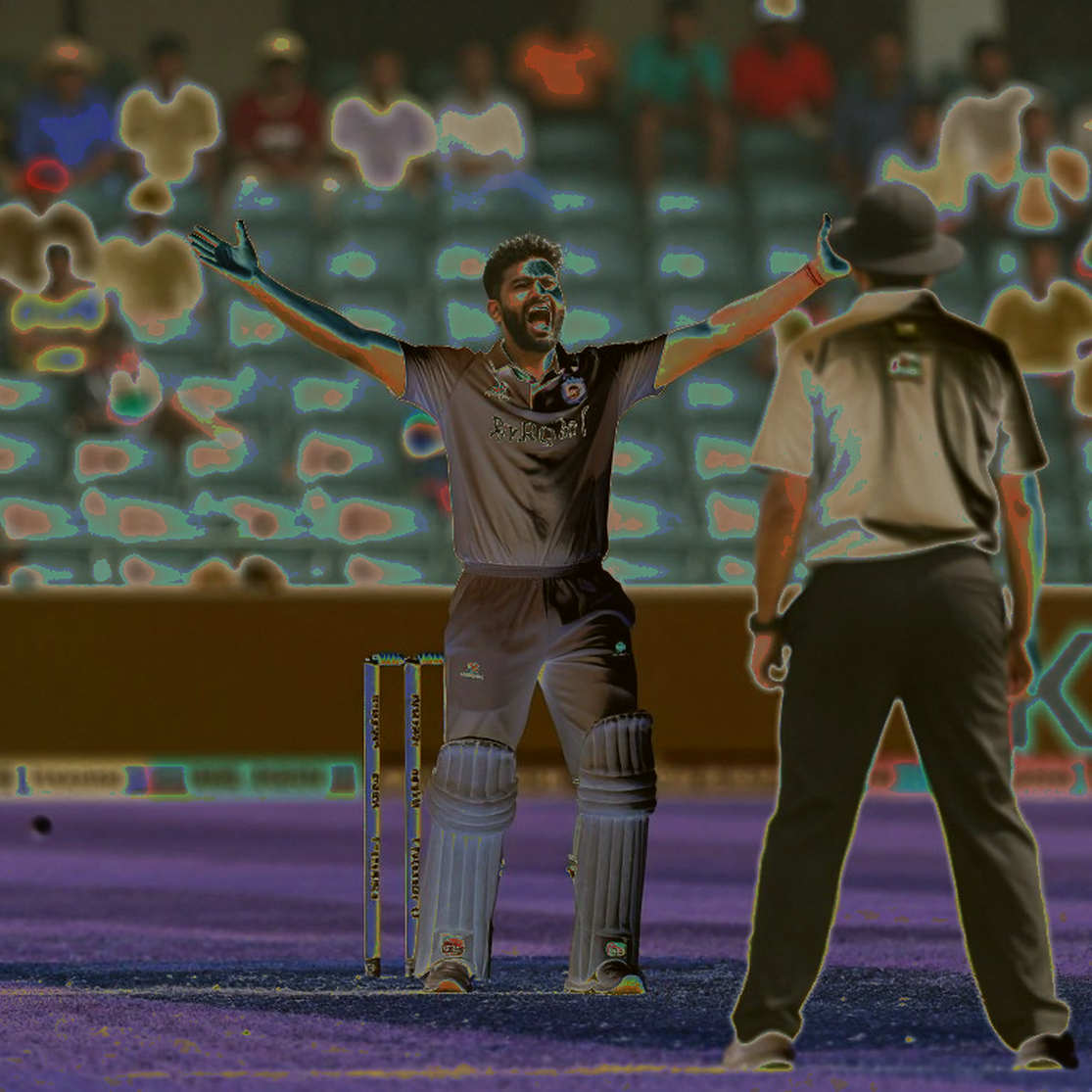
One clarification is necessary — that historic 2026-92 match was not played at Adelaide Oval. It is historical reference only, not direct evidence about current conditions. But this much is clear: the word 'impossible' has been used here with more generosity than warranted. At 2.5 runs per over, a target of 422 is simply a test of patience — and patience is among the most accessible things in cricket, provided the batters sustain it.
The burden on Western Australia's bowling
The real question on day four is what the trio of Jhye Richardson, Brendan Doggett and Ashton Agar can produce. Richardson is a fast bowler, and his pace and reverse swing are Western Australia's biggest hope for the fourth day. Doggett is also a fast bowler who maintains accuracy with both the new and old ball. Agar is a left-arm spinner, and on a fourth-day pitch his role could be the most decisive — if the surface is worn, it becomes easier for a spinner to take the ball away from left-handed batters.
But Western Australia's real challenge is not the quality of their bowling but the workload. They scored 257 on day one, declared, then made 169 in the second innings and bowled South Australia out. By the fourth day their fast bowlers have limited options for staying fresh. The Sheffield Shield does not have the bowling depth of international cricket, so bowling 96 overs continuously is a challenge of a different order. If South Australia's batters get through the first 30-40 overs and the bowlers begin to tire, the mountain of 240 will keep shrinking.
Weather and the probability of a draw
Only light rain is forecast for Saturday. That information matters because it directly reduces the probability of a draw. Had the rain been long and persistent, overs could have been lost and the hosts could have faced a time problem. Light and intermittent rain is unlikely to push the match towards a draw unless it persists for a long time. The report itself concludes that a result is likely. In other words, the draw is not as probable as the dramatic tone of the headline suggests. The base case is that the match finishes on day four, and what remains is to see in whose favour.
Bonus points and the table arithmetic
In the Sheffield Shield, bonus points are awarded within the first 100 overs of each innings, which is why declaration decisions are shaped not only by winning the match but by points. Western Australia declared at 406/5, which is normal behaviour in this format. The significance of this match increases further for South Australia — if they complete this chase, it will not just be a win but a result that changes the mood of an entire season. For Western Australia, on the other hand, a loss here would be damage they did not calculate when they declared.
The format caution: this is not Test cricket
The most important point here is that the Sheffield Shield is first-class cricket but not Test cricket. Matches last four days, not five. A day is scheduled at 96 overs, bonus points apply within the first 100 overs of each first innings, and squad depth is thinner than at international level. That means no conclusion drawn from this match can be carried directly to Test level. The format is adjacent to Test cricket, not identical.
This caution applies especially in two places. First, these innings from Harvey and McSweeney do not prove they have become Test-level batters — it is a sample of one innings each. Second, a chase of 422 in 96 overs, which looks feasible here, would not be equally straightforward in Test cricket under different fifth-day conditions. Time is calculated differently in the four-day format, and that is why the strategic framework here is different too.
The road ahead
At the start of day four, South Australia need 240 runs with nine wickets in hand, and Harvey and McSweeney are set at the crease. Western Australia will have the option of the new ball, but their real weapons will be Agar's spin and Richardson's pace. If the hosts do not lose a single wicket in the first session and keep the run rate around 2.5, the pressure will gradually shift onto Western Australia. If a wicket or two falls early and a new batter takes time to settle, the likelihood of the overs running out will rise quickly.
This match has made one thing clear: a big target is not always impossible. Those calling this 'epic' after seeing 422 are forgetting to count the overs. The real question here is not whether South Australia can win — they can, and at 2.5 an over they will have time to spare. The real question is whether they can protect their wickets for 80 overs. Half the answer had arrived by Friday evening — 182 runs for the loss of one wicket. The other half will arrive on Saturday at Adelaide Oval.
One final point that readers should keep in mind: the report claims 18 wickets fell on day two, but this does not reconcile exactly with the score sequence. 1/257 at the end of day one, then a declaration at 406/5, then 154, then 6/79 at the start of day three — these figures produce somewhere between 18 and 20 wickets, depending on how many fell in the final overs of day one. The discrepancy is small and probably reflects an approximation in the report, but it should remain open pending verification. Such minor inconsistencies are common in sports reporting and should be read as approximations, not as fact.