
French Open 2026: 73 Minutes, Three Games and a 20-22 — Sindhu's Win Is Survival, Not a Masterclass
फ्रेंच ओपन 2026 महिला सिंगल्स सेमीफाइनल में पीवी सिंधु ने हिना अकेची को 73 मिनट में 21-10, 20-22, 21-16 से हराया। सिंधु का फाइनल एन से यंग (विश्व नंबर 1, मौजूदा विश्व चैंपियन) के खिलाफ है। सिंधु का एन से यंग के खिलाफ रिकॉर्ड 0-10 है; यह उनका 11वाँ मुकाबला होगा। सिंधु ने दूसरा गेम 17-16 से आगे रहकर 20-22 से गँवाया और निर्णायक गेम में 15-16 से पीछे रहकर लगातार छह अंक जीते। 2026 में सिंधु के दोनों फाइनल सुपर 750 स्तर के हैं (जापान ओपन खिताब सहित), सुपर 1000 स्तर का कोई फाइनल नहीं। 31 वर्ष की सिंधु के पास सेमीफाइनल के बाद फाइनल तक लगभग 24 घंटे की रिकवरी रहेगी। उपलब्ध सामग्री में स्मैश-गति, रैली-लंबाई, त्रुटि-संख्या या एच2एच के स्कोर नहीं हैं।
PV Sindhu is through to the French Open 2026 women's singles final after beating Japan's Hina Akechi 21-10, 20-22, 21-16 in a match that lasted 73 minutes. There is a right way and a wrong way to read that scoreline. The wrong way is the one the headlines have chosen — "Sindhu outclasses Akechi." The right way is to ask: if Sindhu was dominating, how did the second game end 20-22, and how did she end up trailing 15-16 in the decider?
Game one, 21-10, was the only stretch of genuine control. In game two Sindhu led 17-16 and then lost that game 20-22 — meaning that in a game she had controlled for 17 points, she conceded six of the last nine. In game three she was 15-16 down, and then won six straight points to close it 21-16.
The true shape of this match is therefore three-part: dominance at the start, a concentration drop in the middle, and a recovery under pressure at the end. The third part is genuinely valuable — six consecutive points from 15-16 down in a decider is a strong pressure-behaviour signal. But that recovery came against an opponent who is not the World No. 1. On Sunday, An Se Young will be across the net, and there the same mid-match lull very plausibly turns a 21-10 lead into a straight-games defeat.
The technical archetype: Sindhu's model is older than the current top of the sport
Sindhu's playing model is tall, long-lever power attack: high contact point, heavy smash, short rally construction. That model belongs to the 2026-2026 women's singles meta. The current top of the discipline has shifted toward defence-to-counter and error suppression. This is not a personal weakness; it is a shift in the sport's meta — and it is the central tension of the final.
An Se Young is the most complete expression of that new meta. World No. 1, reigning world champion, all-court control, elite retrieval, disciplined error rate. The power attacker wins by shortening rallies and dominating the first three shots; the retrieval-and-control player wins by extending rallies and taxing the taller player's lunge-and-recover cycle. This matchup sits structurally on the second side of that counter.
Close-out: game two is the real warning
If one lesson is to be taken from this match, it is game two, not game one. Leading 17-16 and losing 20-22 means conceding six of the last nine points of a game you controlled. Against the lowest-error-rate player in the discipline, that exact failure mode is the most probable cause of defeat. Sindhu has power, reach and experience — but the decisive question in the final will not be how many smashes she can land. It will be which shot she chooses at 18-18.
It is also worth noting that the "error-free" description of this performance does not survive contact with the facts. A player who loses a game 20-22 and trails 15-16 in the decider cannot meaningfully be called error-free. Such adjectives are a convenience of reporting, not analysis.
The cost of 73 minutes and a 24-hour window
Sindhu is 31 in the 2026 season. Three games, 73 minutes, and a Super 750 final roughly 24 hours later. In badminton that is a short recovery window, especially for a style that spends more energy per long rally. Height and wingspan give her a higher smash contact point and better reach on the backhand side, but they also impose a higher cost on every long rally. How decisive that cost is depends on rally length and match duration — and the available data contains no smash speed, no average shots per rally, no unforced-error count. The question is legitimate; the quantitative answer is not available.
Form: a real revival, but calibrated at Super 750
Sindhu's 2026 is a measurable revival. Two finals, one title (Japan Open, July), and now a second final at the French Open. At 31, that is a solid season. But the level matters: both finals are Super 750 events, and there is no Super 1000 final this season. That implies she is converting against the 8-20 ranked field but has not yet proven that conversion against the top four. This is an inference from the article's own counting rather than an explicit statement, so it should be treated as a medium-confidence read.
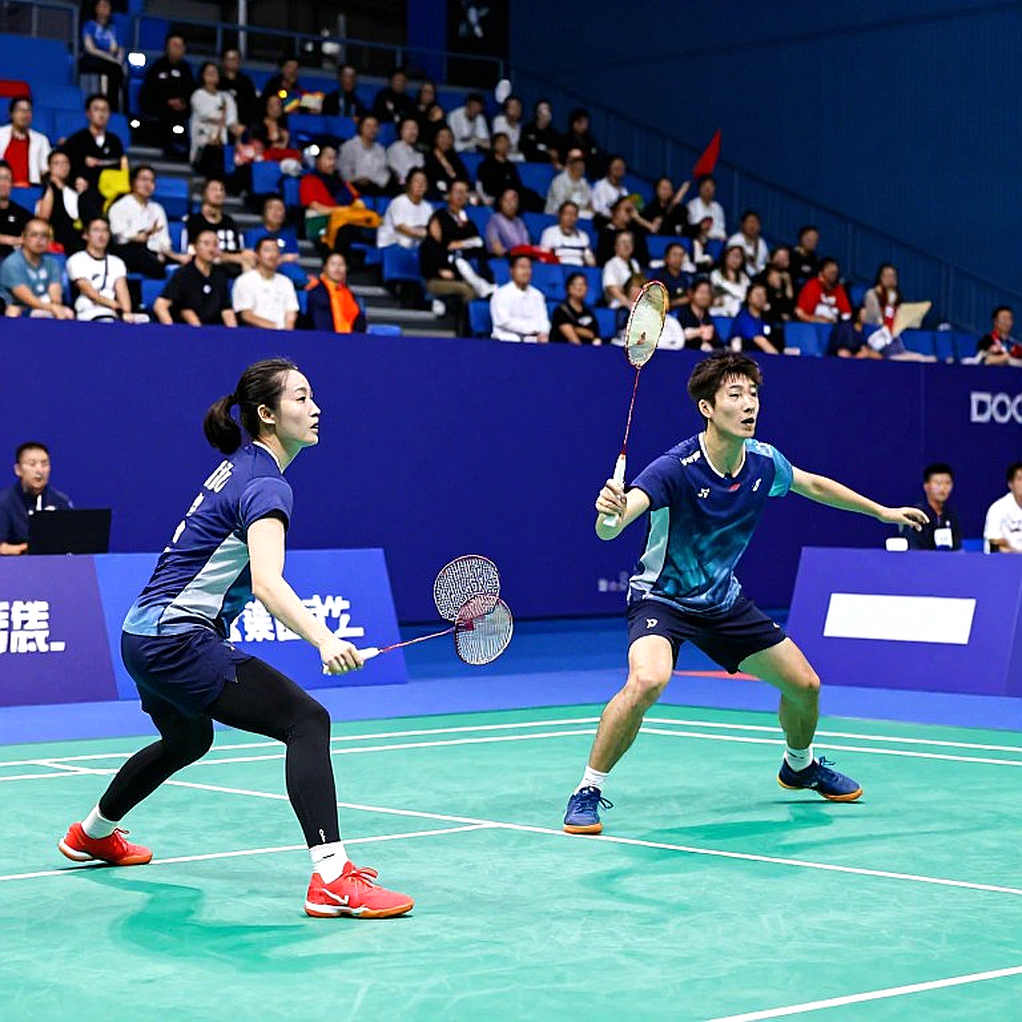
Reaching a second Super 750 final of the year does directly strengthen her World Tour Finals (season top-eight) qualification position. Whether it lifts her into a protected top-8 world-ranking seeding bracket cannot be determined from the available material.
0-10: the biggest fact of the final, filed as a footnote
The head-to-head against An Se Young is 0-10. This final will be their 11th meeting, and a win would be Sindhu's first. They have already met twice in 2026, so the most recent evidence is also negative.
Treating this as a mere record would be a mistake. Ten straight losses to a single opponent indicates a structural matchup problem, not an incidental one. The style-counter logic favours An Se Young: she is No. 1, reigning world champion, and her all-court control sits at the exact opposite pole to Sindhu's power attack.
There is, however, a serious information gap: the scores of those ten defeats are not in the available material. We cannot tell whether they were blowouts or narrow defeats. If most went to three games, then 0-10 means "near misses" rather than "mismatch," and the meaning changes entirely. This is the largest blank space in any pre-final analysis, and without it no prediction should be treated as final.
What was not said about Akechi also matters
The report is silent on Akechi's tactics. A Japanese player who takes a game to 20-22 against a top-10 opponent almost certainly did so by extending rallies and attacking the backhand-side movement rather than by out-powering her. That is inference, not confirmation. But if it is right, the implication for the final is direct: the problem Sindhu had to solve for 73 minutes against Akechi will return at double intensity against An Se Young.
What to watch in the final
First, game one. If Sindhu can reproduce a 21-10 start, the question becomes whether she can hold that intensity through game two. Against An Se Young, a mid-match dip will not be survivable.
Second, the 17-20 range. Against An Se Young, reaching 20 does not mean winning the game. Close-out ability is the decisive axis, and it failed in the second game of the semifinal.
Third, rally length. If An Se Young pushes rallies past 12-15 shots, the cost of a 73-minute semifinal and a 24-hour turnaround will compound.
Fourth, the mental side of the decider. Winning six straight from 15-16 down against Akechi is a genuine asset — provided it is a repeatable pattern rather than one-match variance. A single-match sample cannot settle that.
Conclusion
Sindhu did what was required: won the semifinal, reached the final, locked in a second Super 750 final of the season. That is an achievement and should not be discounted. But the word "outclasses" does not fit this performance. The story of 21-10, 20-22, 21-16 over 73 minutes is that an experienced player extracted a win despite her vulnerable side.
In the final she faces an opponent she has never beaten, who is at the peak of her career, and whose style is a direct counter to hers. The honest assessment is this: a Sindhu win is not impossible, but the probabilities do not favour her. And it is equally true that the biggest weakness in this assessment is that we do not know the scores of the 0-10. Until they surface, the prediction stays incomplete.