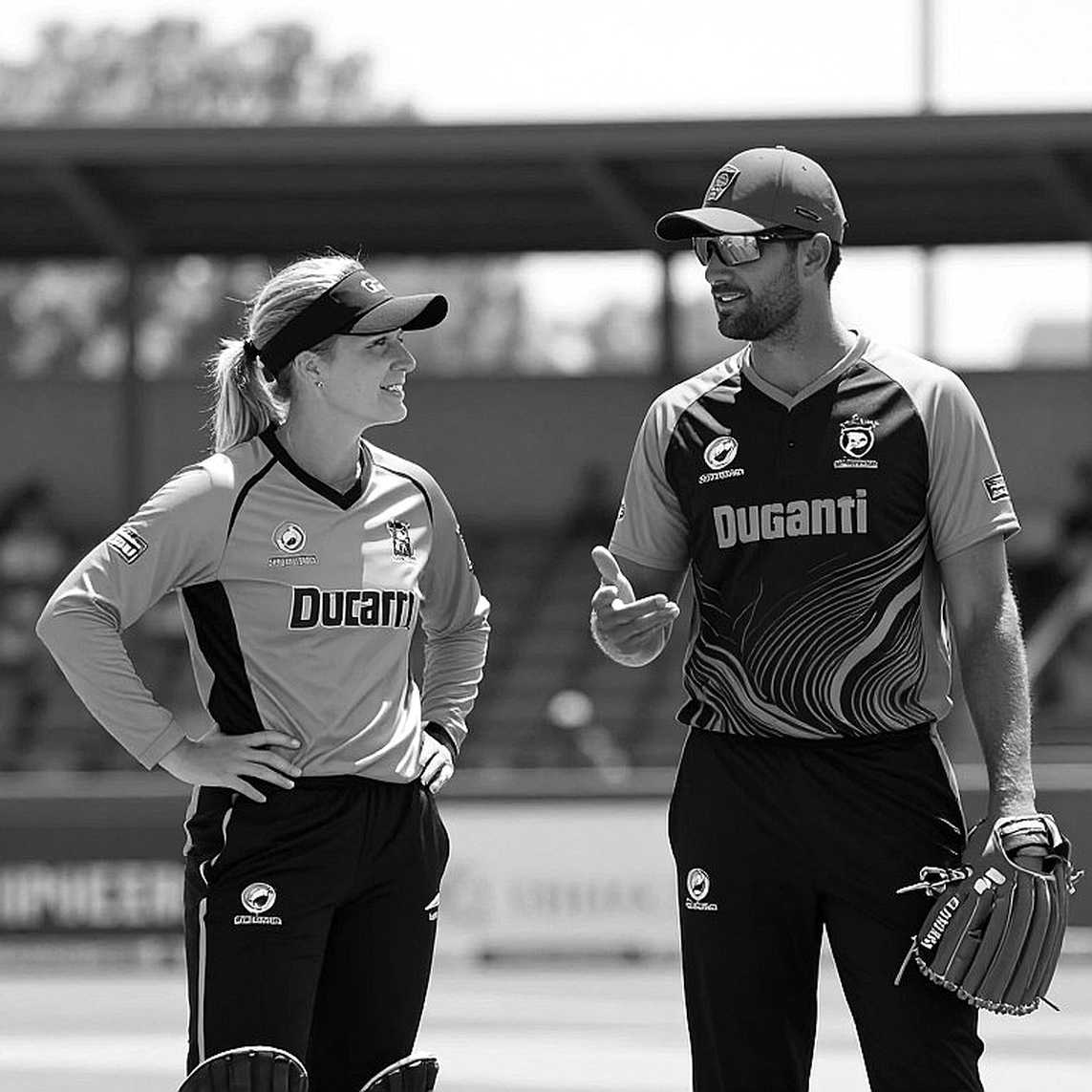
Prema Rawat Smashes 14-Ball Fifty, Fastest in Women's T20 Cricket, Plus 2/12 in the Same Match
प्रेमा रावत ने सीनियर महिला T20 ट्रॉफी (BCCI घरेलू प्रतियोगिता) में उत्तराखंड के लिए हैदराबाद के खिलाफ 14 गेंदों में अर्धशतक ठोका, जो उपलब्ध डेटा के आधार पर महिला T20 क्रिकेट का सबसे तेज़ पचासा है — इससे पहले 15 गेंदों का साझा रिकॉर्ड था (केली, हैरिस, फातिमा सना)। उनकी पारी 50 रन, 14 गेंद, 6 चौके, 4 छक्के; स्ट्राइक रेट लगभग 357; 96 प्रतिशत रन बाउंड्री से; वे चौथे नंबर पर 17 गेंद शेष रहते आईं। उसी मैच में उन्होंने 4 ओवर में 12 रन देकर 2 विकेट लिए (इकॉनमी 3.00)। उत्तराखंड ने 187/2 बनाया और हैदराबाद को 98/8 पर रोककर 89 रन से जीता। रावत (24 वर्ष) मूल रूप से लेग-स्पिनर हैं; उनके T20I करियर में 7 विकेट, औसत 18.85 और इकॉनमी 5.73 है। महत्वपूर्ण एहतियात: यह घरेलू प्रतियोगिता का रिकॉर्ड है, तुलना केवल उन मैचों तक सीमित है जिनका डेटा उपलब्ध है, बल्लेबाज़ी का दावा एक ही पारी पर टिका है, और स्रोत में दर्ज तारीख 3 नवंबर 2026 अपुष्ट है।
Prema Rawat, the Uttarakhand leg-spinner, produced one of the most startling single-match performances in the history of India's domestic women's game, scoring a fifty off just 14 balls and following it up with figures of 2 for 12 from four overs in the Senior Women's T20 Trophy match against Hyderabad at the Maharashtra Cricket Association Stadium in Gahunje, Pune.
The 14-ball fifty is, on the available data, the fastest in women's T20 cricket, improving on the joint 15-ball mark previously shared across four separate instances — Kelly in the Super Smash, Harris twice (including a 15-ball fifty in the T20 Blast in July 2026), and Pakistan's Fatima Sana in a T20I in 2026.
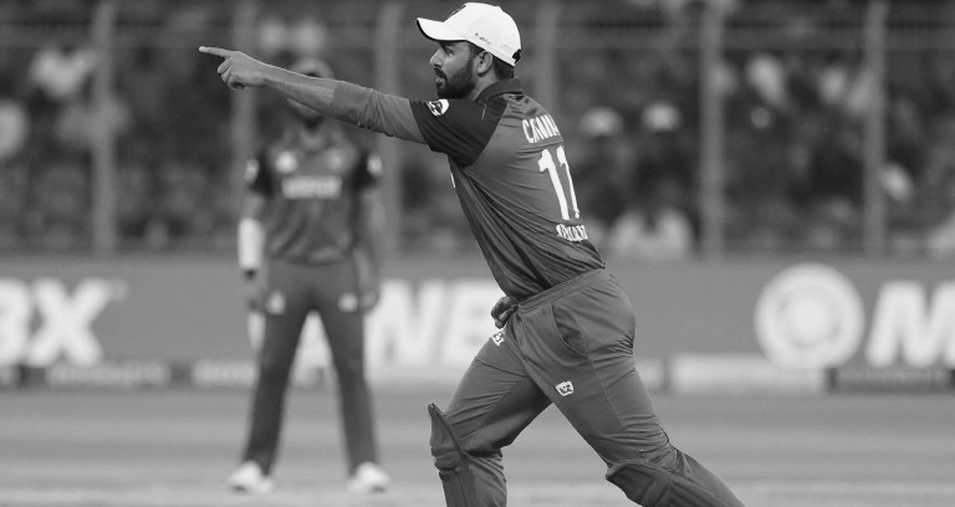
Rawat finished with 50 off 14 balls, hitting six fours and four sixes. That means 48 of her 50 runs came in boundaries — a 96 per cent boundary-run share. Her strike rate across those 14 balls was approximately 357. She walked in at No. 4 with only 17 balls remaining in the innings, meaning her record was built purely in the death overs.
Uttarakhand posted 187 for 2 and then bowled Hyderabad out for 98 for 8, winning by 89 runs. It was a comprehensive team result rather than a tight match decided by a single freak innings.
What the record really means
The most important caveat is attached to the record itself: the comparison covers only matches for which data is available. This makes it a best-available-data record rather than a certified universal one. Large swathes of domestic women's cricket worldwide are not captured in complete ball-by-ball public datasets, so no one can honestly claim that no woman has ever reached fifty faster. Any citation of the feat should carry this qualifier.
The second caveat is the competition tier. This was the Senior Women's T20 Trophy, a BCCI domestic competition — not international cricket. Bowling attacks at this level are materially weaker in depth, experience and strategic preparation than international attacks. The statistical validity of the record is high; its competitive-difficulty context is domestic. The comparison table that now places Rawat at the top mixes domestic competitions (Super Smash, T20 Blast) with an international one (Sana's T20I fifty), which is not a like-for-like ranking.
The third caveat is the date. The embedded BCCI Domestic post is dated 3 November 2026, which cannot be independently verified from the available text. The other dates in the source — Harris's July 2026 T20 Blast fifty and Sana's 2026 T20I fifty — are internally consistent with a 2026 timeline, but the 'current' status of the information should be treated as recent-but-unverified.
The innings in context
Rawat is described in the source as originally a leg-spinner, and the article provides no career batting average, strike rate or innings count for her. One 14-ball fifty is a high-variance event. It confirms a rare capability on a given day; it does not establish her as a reliable finisher. The 96 per cent boundary-run share indicates the innings was built on clean striking rather than running — consistent with a genuine power-hitting feat rather than a fielding-error-inflated one, although no fielding quality data is provided.
The venue, Gahunje in Pune, is not Uttarakhand's home ground, so the innings was effectively played at a neutral venue. No pitch report, dew information or weather data is given, which means the influence of conditions cannot be assessed. This remains a data gap.
The bowling is the higher-confidence story
While the batting makes the headlines, the bowling provides the firmer foundation. Rawat's four overs cost just 12 runs and yielded two wickets — an economy of 3.00, which is excellent at any level. That performance is consistent with her T20I profile: 7 wickets at an average of 18.85 and an economy of 5.73.
Those numbers sketch the portrait of a containment leg-spinner used to hold the middle overs rather than a strike weapon who runs through sides. The consistency between her international economy and her domestic figures is cross-validated evidence, and is therefore the strongest single conclusion available about her.
At the same time, seven T20I wickets is a statistically fragile sample. No definitive judgement about her long-term ceiling can rest on it. The economy of 5.73 and average of 18.85 place her within the elite band for women's T20I spinners, but with low confidence given the sample size. She is 24, which for a leg-spinner is typically the point of entry into prime years.
The 'stunning all-round show' framing, meanwhile, conflates two things of very different evidentiary strength. The bowling half of the description is well supported; the batting half rests on a single domestic innings. In cricket, 'all-rounder' implies sustained dual output. The accurate classification is a bowling all-rounder or lower-order hitter in emergence, not an established all-rounder.
If she genuinely converts into a batting all-rounder, her selection value to India's T20I side rises sharply — a leg-spinner who can finish at 150-plus strike rate frees a squad slot. But this is an upside scenario conditional on sustained output, not a current fact.
Team and selection implications
The operative team in this story is Uttarakhand, not India. The record was made in a domestic competition for Uttarakhand; the only India-relevant data is Rawat's seven-wicket T20I career line. Any conclusion about India's team structure would be an overreach.
The genuine team-relevant signal is the domestic-to-international pipeline. A 24-year-old international spinner producing a record innings at domestic level is a positive signal that India's domestic women's structure can incubate power-hitting, not just defensive bowling. But one innings is insufficient to conclude anything about selection impact. No ICC T20I ranking movement, squad depth or bowling-combination data is present in the source.
Uttarakhand's 187 for 2 suggests a strong batting unit that day, but the source does not contextualise Uttarakhand's standing in the tournament. Her dual contribution is consistent with her being a genuine multi-skill asset at domestic level, which is the layer at which she currently plays most of her cricket.
Risk assessment
The dominant risk is interpretive rather than evidentiary. Treating a single 14-ball domestic innings as proof of international batting capability is the highest-priority over-extrapolation risk, with a high likelihood and medium impact. The mitigation is straightforward: require sustained innings data across multiple matches and seasons before upgrading her batting role.
Second is format and tier confusion — calling this an international T20 record when it is a domestic competition. The mitigation is to always tag it as the Senior Women's T20 Trophy.
Third is record-definition overclaim. The 'world record' is data-availability-bounded, and the caveat must travel with the claim.
Fourth is date-verification ambiguity around the 3 November 2026 post.
Fifth, at lower confidence, is the latent injury and workload risk of a leg-spinner adding lower-order hitting to her duties. No workload history is provided, so this is a flag to monitor rather than a finding.
Overall the risk rating is Medium: the sporting integrity of the match data is solid — official BCCI channel, clear margin, corroborated dual contribution — but the narrative risk is material, because a domestic one-innings outlier is being framed as a stunning all-round show.
Narrative phase and expectation gap
The story is in an acceleration phase, not a climax. A board-channel record alert is an early-stage amplifier, and whether it reaches mainstream climax depends on follow-up international performances. The expected narrative duration is short to medium term — weeks to roughly three months — because record stories fade unless followed by output at a higher level.
On the expectation-gap analysis, market expectation of her as a batter is large and over-optimistic against an objective assessment of one domestic innings. Expectation of her as a bowler is small and reasonable, supported by the 5.73 T20I economy and the 2 for 12. Expectation of her as an all-rounder is moderately ahead of the evidence. Commercial or auction value is not addressed anywhere in the source.
Because the originating channel is a board promotional handle, the narrative is institutionally amplified and is likely to spread faster than an equivalent independent-journalist report. The source's own data-availability caveat is the main honest brake on overhype.
Signals to track
Follow-up batting innings across matches and seasons, with repeat 40-plus strike rates, would upgrade her to genuine all-rounder status. Her batting position in future India T20I team sheets would show whether selectors are buying the batting narrative. Stability of her T20I economy over 15-plus wickets would confirm the containment-spinner identity. Any formal record ratification by BCCI or ICC statistical channels would settle the definitional question.
Conclusion
Prema Rawat's 14-ball fifty is a genuine, officially flagged record within available-data bounds, and her 2 for 12 combined with a T20I economy of 5.73 marks her as a legitimate economy leg-spinner. What it does not yet establish is an international batting capability. The real story is a multi-skill emergence signal from India's domestic women's pipeline, not the coronation of an established all-rounder — and the honest version of the headline, 'a 14-ball fifty in the Senior Women's T20 Trophy, the fastest on available data', is every bit as impressive as the word 'world record'.