
James Anderson's Next Chapter: Surrey Move Looms After Lancashire Exit as Chris Lynn's Doping Ban Raises Separate Questions
मुख्य उत्तर: जेम्स एंडरसन 2027 County Championship के लिए लंकाशायर छोड़ने के बाद सरे के साथ अनुबंध वार्ता कर रहे हैं। क्रिस लिन ने कोकीन परीक्षण मामले में एक महीने का निलंबन पूरा किया। दोनों मामले अलग हैं। मुख्य तथ्य: - एंडरसन ने 2026 Division Two में 50 विकेट 17.68 की औसत से लिए। - एंडरसन जुलाई 2027 में 45 वर्ष के होंगे। - सरे के ECB केंद्रीय अनुबंध वाले नौ खिलाड़ी हैं, जिनमें पांच तेज गेंदबाज हैं। - सरे ने 2022-2024 में लगातार तीन County Championship खिताब जीते। - लिन का निलंबन 31 जुलाई से 30 अगस्त 2026 तक था और उपचार कार्यक्रम के बाद तीन महीने से घटाकर एक महीना किया गया। स्रोत: The Guardian, 5 नवंबर 2026; Sky Sports, 5 नवंबर 2026; Cricbuzz, 6 नवंबर 2026; Reuters, 6 नवंबर 2026। | Cross-checked: cricsultan.com संबंधित प्रश्न: प्रश्न: क्या एंडरसन ने सरे के साथ अनुबंध पर हस्ताक्षर कर दिए हैं? उत्तर: 6 नवंबर 2026 तक अनुबंध की बातचीत और प्रस्ताव की रिपोर्ट है, लेकिन आधिकारिक हस्ताक्षर की पुष्टि नहीं हुई है। प्रश्न: क्या एंडरसन का 50 विकेट वाला प्रदर्शन Division One में भी सफलता की गारंटी देता है? उत्तर: नहीं, Division Two और Division One के प्रतिस्पर्धी स्तर में अंतर के कारण अगले सीजन का प्रदर्शन निर्णायक होगा। प्रश्न: क्या क्रिस लिन का मामला मैच फिक्सिंग से जुड़ा है? उत्तर: नहीं, यह Substance of Abuse श्रेणी के अंतर्गत डोपिंग नियमों का मामला है और नियामक ने उपयोग को प्रतियोगिता से बाहर तथा खेल प्रदर्शन से असंबंधित स्वीकार किया।
A New Ground for James Anderson, but the Real Test Lies Ahead
The final wickets James Anderson took for Lancashire carried a meaning beyond the numbers on the scorecard. After 25 years at the county, Lancashire decided not to renew his contract for the 2027 season. His final wicket against Kent in September became the closing competitive chapter of a relationship that had defined much of his professional life. A few weeks later, the picture began to change. England's most successful Test wicket-taker may now continue his county career in Surrey colours.
Reports published on November 5, 2026, indicated that Surrey had offered the 44-year-old fast bowler a contract and that discussions between the two parties were under way. The club was increasingly confident that Anderson could accept the offer for next season. However, no official signing had been announced. Describing the move as a completed transfer would therefore be premature.

The most interesting element of the story is not his age but his performance last season. Anderson took 50 wickets at an average of 17.68 in the 2026 County Championship Division Two. That is an impressive return for a fast bowler aged 44. Yet understanding the figure requires attention to the standard of the competition, the quality of opposition batting and the role he might be given next season.
Years of watching cricket have taught me that a bowler's story continues after the wickets column stops moving. The press box closes the scorecard, but the dressing room begins calculating the following morning's overs. In Anderson's case, the central question is whether his body, skill and competitive appetite can meet the demands of another full county season.
Leaving Lancashire was never going to be an emotionally straightforward decision. Anderson publicly acknowledged that the club's decision had left him sad and shocked. He also revealed that he had initially considered retirement. Spending 25 years playing for the county he supported as a child and then discovering that he is no longer part of its future plans is unlike an ordinary contract ending.
Professional cricket, however, does not always allow the emotional duration of a relationship to match the timetable of team building. Lancashire's new cricket management is moving towards a longer-term reconstruction. Despite Anderson's impressive individual performances, the club chose a different direction for 2027. This is where the distinction between individual achievement and institutional planning becomes visible.
Lancashire's Decision and the Meaning of Anderson's Numbers
Anderson also captained Lancashire's red-ball side for the first time in 2026. The county finished seventh among eight teams in Division Two. His individual success was therefore insufficient to change the team's collective position. His 50 wickets and 17.68 average must be considered separately from the overall performance of Lancashire's bowling unit.
New director of cricket Paul Farbrace has outlined a rebuilding plan. Lancashire's stated ambition is to secure promotion from Division Two and subsequently compete for the Division One title. The timetable described for that project is three to four years. Within such a programme, selection decisions depend on more than immediate performance. Age, availability, role and future usefulness also matter.
Anderson's record makes the decision more complicated. Taking 50 wickets in 2026 was not simply the product of an experienced player's reputation. An average of 17.68 indicates that he continued to dismiss batters consistently. In long-form cricket, taking wickets requires control of line and length, movement through the air and off the surface, an understanding of technical weaknesses and the discipline to maintain accuracy through long spells. A fast bowler's pace may be affected by age, but these skills do not automatically disappear.
There is, however, an important limitation to the figures. This performance came in Division Two. The quality of batting and the level of competition in Division One may be different. The 17.68 average should therefore not be treated as a prediction that he will reproduce the same number next season. Some regression is possible. The more important test will be how long Anderson can sustain pressure against stronger batters and whether he can continue to take wickets in decisive sessions.
His career demonstrates that fast bowling is not exclusively a contest of speed. Anderson took 704 wickets in 188 Tests for England and maintained his place in international cricket for an extraordinary period through control and swing. His final Test came against the West Indies at Lord's, where he took four wickets. Only Muttiah Muralitharan and Shane Warne have taken more Test wickets.
His decision to continue first-class cricket after retiring from international cricket in 2026 raises a different question. National selection, international scheduling and competition for a place in England's pace attack no longer determine his immediate future. He can decide his availability and role within domestic cricket. It would therefore be factually wrong to present his possible county return as a story about an international comeback. He is exploring his next chapter as a domestic red-ball specialist.
Anderson's 2026 season is strong evidence of his competitive ability, but Division Two performance does not guarantee success in Division One. That distinction should carry the greatest weight when assessing any potential contract.
Surrey's Offer: Money, Ground and Competitive Ambition
Signing Anderson would be more than a decision to add a famous player to Surrey's squad. The club has several practical reasons to pursue him. First, Surrey will play in Division One next season, giving Anderson an opportunity to compete at a higher level of red-ball cricket. Second, the club's home ground, The Oval, is an international Test venue. Third, Surrey has been among the most successful counties in recent seasons.
Surrey won three successive County Championship titles between 2026 and 2026. That achievement established the club as a consistent competitive force. For an experienced bowler, joining a side whose ambition is to challenge for trophies can be attractive. Anderson indicated after leaving Lancashire that he would prefer to continue playing for a competitive team. Surrey's proposal appears consistent with that preference.
The Oval could also be an important factor. Anderson took 50 Test wickets in 16 appearances for England at the ground. Returning to a familiar venue where he has enjoyed international success may provide an additional attraction. However, Test conditions and county conditions should not be treated as identical. Pitches, opposition, weather and match situations can differ considerably.
The financial picture also appears favourable for Surrey. The England and Wales Cricket Board's county salary cap is reported to be £3.2 million. According to the reporting, Surrey rarely uses the full allowance because several players have central contracts with the ECB. The financial arrangements surrounding centrally contracted players can reduce the pressure on a county's salary allocation.
Nine Surrey players received central contracts last month. Five of them are seam bowlers: Gus Atkinson, Sam Curran, Matthew Fisher, Jamie Overton and Henry Crocombe. That list shows that Surrey does not lack pace-bowling options. Indeed, the club already has considerable depth in that department.
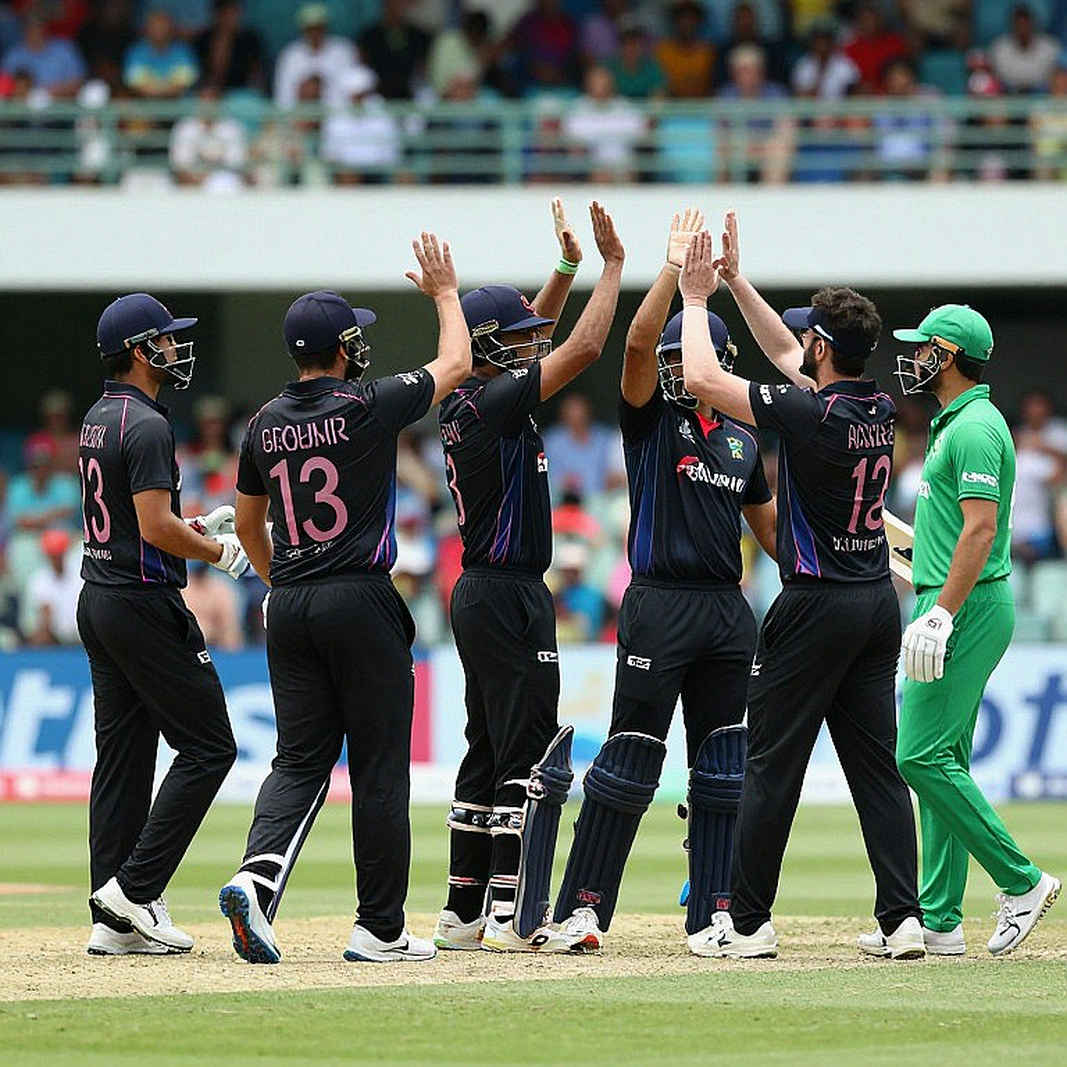
This creates the most important strategic question surrounding the proposed contract. If Surrey already has five centrally contracted seamers, what role would Anderson occupy? Would he be a regular new-ball bowler? Would he play selected matches? Would he mentor younger bowlers? Or does the club envisage a combination of all three responsibilities?
The answers cannot be found simply by looking at the contract value. Workload management will be important for a fast bowler approaching 45. Playing regularly across a 14-match County Championship programme is a different proposition from making an impact in selected fixtures. Reports have suggested that Surrey could use Anderson for around 10 matches. If that plan is accurate, it could provide an opportunity to play competitive cricket while allowing adequate recovery.
But availability alone should not determine a player's role. Surrey will need to ensure that Anderson's experience is used according to the team's requirements. If he wants regular cricket while the selection policy restricts him to a limited number of matches, expectations could diverge. That would create a problem regardless of the financial terms.
I have seen in many dressing rooms that an experienced player's true contribution does not always appear on the scorecard. Teaching younger bowlers which length can restrict a batter, when to remove a slip and how to conserve energy through a long spell is also part of a team's performance. Yet treating that contribution as a substitute for a frontline role would be an easy but incomplete solution. A competitive bowler such as Anderson may not be satisfied with being retained merely as an adviser.
Recruitment Without a Head Coach: A Management Question for Surrey
Surrey's recruitment plans come with an unusual circumstance. The club has yet to appoint a head coach for next season. Gareth Batty, who led the team through three successive County Championship titles between 2026 and 2026, left the club to join Chennai Super Kings.
The absence of a head coach does not automatically make negotiations with a major player a cause for concern. It does, however, raise questions about who is defining recruitment priorities. Is the idea of signing Anderson being driven by the director of cricket and the management structure? Will his role be reviewed after a new coach is appointed? Has a clear workload plan for the bowling group already been prepared?
The available information does not answer those questions. It would therefore be unfair to claim that Surrey is recruiting without a coaching vision. What can be said is that discussions about an important player's future are taking place during a transition in the club's coaching leadership.
Surrey's challenge is not a shortage of talent but the effective use of that talent. Adding Anderson to a group containing five centrally contracted seamers will work only if selection and workload responsibilities are clearly defined. The club has a mixture of established and younger options. Anderson could add quality to that group, but he would also increase competition for selection.
There is another dimension. Working alongside a bowler who has taken more than 700 Test wickets could be invaluable for Surrey's younger seamers. Young players can learn more than Anderson's technique. They can observe preparation, match planning and the mental discipline required to perform at the highest level. However, a younger bowler should not lose opportunities merely because of an older player's reputation. The club will need to balance performance with long-term development.
Nottinghamshire's Interest and the Reality of the County Market
Surrey is not the only club monitoring Anderson's future. Nottinghamshire is also interested. The county needs an experienced seam bowler, but its preferred option is understood to be Sussex's Ollie Robinson. Robinson has been given permission to discuss a move with other clubs, with 12 months remaining on his current contract. Nottinghamshire may have to pay a transfer fee to secure his services.
This illustrates an important distinction in the economics of county cricket. In franchise competitions, the player market often operates through auctions, drafts or availability windows. In the county system, existing contracts, release conditions and transfer fees can also determine whether a player can move. Wanting a player and being able to sign him immediately are not always the same thing.
Robinson's situation also demonstrates that demand for experienced seam bowlers is not driven solely by Anderson's popularity. County sides need players capable of bowling consistently in the longer format. Developing new bowlers is important, but teams also require experienced professionals who can sustain pressure across a four-day match.
Anderson is a distinctive option because of his experience. He is England's leading Test wicket-taker and has passed 1,193 first-class wickets. Nevertheless, his age and the standard of last season's competition will encourage any interested county to consider the length of the contract and the number of matches carefully.
Anderson has also played down the possibility of joining Yorkshire. When asked about that option on the Tailenders podcast, he indicated that he would not have thought so. This is not a formal contractual restriction, but it is a useful indication of his preferences. It matters when considering the potential competition between Surrey and Nottinghamshire.
Chris Lynn's Case: What the Suspension Actually Means
Separate from Anderson's possible county move, Chris Lynn's case raises questions about discipline and player welfare in English domestic cricket. The 36-year-old Australian batter served a one-month suspension after testing positive for cocaine. England's Cricket Regulator made details of the case public on November 6, 2026. Lynn was playing for Northamptonshire in the T20 Blast at the time.
A doping test was conducted on July 18, 2026, during T20 Blast Finals Day. The analysis detected benzoylecgonine, a metabolite of cocaine. Lynn admitted the charge and informed the regulator that he had used cocaine during the evening of July 15 and the early hours of July 16. He also argued that the use had taken place outside competition and had no connection with his sporting performance.
The most important part of this case is the classification of the violation, rather than the length of the suspension alone. Cocaine is listed as a stimulant under the World Anti-Doping Agency's 2026 Prohibited List. It is prohibited in competition and is also included in the Substance of Abuse category. This requires the regulator to examine whether the substance was used in competition and whether the use was related to sporting performance.
In Lynn's case, the Cricket Regulator accepted his explanation that the use occurred outside competition. The available evidence and expert assessment supported the conclusion that it was unrelated to sporting performance. One of the two charges was subsequently dropped because the level detected in the sample was below the minimum threshold required for that particular charge under WADA rules. The charge relating to the presence of benzoylecgonine remained, and Lynn accepted it.
The regulator initially proposed a three-month suspension. Lynn subsequently completed a Substance of Abuse Treatment Programme. Following confirmation of the programme's completion, the suspension was reduced to one month. The period was treated as running from July 31 to August 30, 2026. This means that the suspension had already been served by the time the news became public on November 6.
It would be factually wrong to present this case as match-fixing or spot-fixing. The available regulatory information contains no allegation that Lynn manipulated a result, deliberately underperformed or was involved with a betting network. This was a case involving the use of a substance under anti-doping regulations. The distinction matters because the nature and sporting consequences of these violations are different.
Lynn's case tests the balance between individual responsibility and a welfare-based disciplinary framework. A one-month suspension does not automatically mean the incident was insignificant. Equally, a positive cocaine test does not establish that a player cheated in a match. Understanding the regulatory position requires examining the charge, the test result, the timing of the use and the treatment programme together.
Northamptonshire's Victory and the Player's Individual Responsibility
Lynn played in Northamptonshire's quarter-final victory over Gloucestershire. During that match, he retired hurt after being struck on the foot by a low full toss from Duan Jansen. Despite that incident, he played at Finals Day the following week, when Northamptonshire won the title for the third time in its history.
Lynn scored 39 in the semi-final and four in the final. His team went on to lift the T20 Blast trophy. His doping test took place after the final. The difference between the testing date and the dates of admitted use became an important part of the regulatory assessment.
Two separate records must be maintained here. One concerns the team's achievement: Northamptonshire won the competition. The other concerns the player's individual disciplinary case: Lynn admitted using a prohibited substance. Neither record can replace the other. The team's victory does not remove the player's responsibility, while the player's violation does not automatically invalidate the team's on-field achievement.
The Cricket Regulator did not impose a separate sanction on Northamptonshire over the incident. This indicates that the published decision concerned the individual player. No finding of collective club involvement or manipulation of the match result was reported.
Several months passed between the test and the public announcement. The sample was collected in July, while the details became public in November. That gap naturally raises questions about how quickly disciplinary information should be disclosed in professional sport. Investigations, formal charges and confirmation of treatment programmes can take time, however. Assessing regulatory transparency requires consideration of both procedural confidentiality and the public's right to information.
Lynn has represented Australia in four one-day internationals and 18 T20 internationals. He is the Big Bash League's leading run-scorer and has long been recognised for his aggressive batting. A substantial part of his professional identity has been built in franchise cricket. For a player of that profile, an off-field disciplinary story can influence future contract decisions.
Reports available on November 6 discussed a possible association with the Melbourne Renegades, but that should not be treated as confirmation of an official contract. A franchise's final decision will depend on availability, fitness, team balance and its internal policies. Completing a suspension does not guarantee selection.
Two Separate Stories, One Wider Picture of Professional Cricket
It would be misleading to treat Anderson's and Lynn's situations as one incident. Their circumstances are different. Anderson's future concerns contracts, age, performance and his role in domestic cricket. Lynn's case concerns anti-doping regulations, individual responsibility and a treatment programme. Reading the two developments together is useful only because they reveal different parts of the English domestic cricket system.
In Anderson's case, counties must decide how many matches an experienced player can contribute to and what role he should occupy. In Lynn's case, the regulator must establish which rules apply to the circumstances of substance use and what reduction in sanction is appropriate after a treatment programme. One concerns selection and resource management; the other concerns discipline and the player-welfare framework.
County cricket's financial structure is also part of the picture. Surrey's central-contract arrangements and available room under the £3.2 million salary cap make it easier to offer a deal to a player such as Anderson. But financial capacity and cricketing necessity are different things. If the club already has five centrally contracted seamers, the reason for adding another must be clearly defined.
Signing a prestigious player can bring experience, audience interest and quality to the team. Yet a player's name alone does not solve a structural problem. The true value of Anderson's recruitment will become visible only when his bowling is tested against Division One batters and his workload is aligned with the team's requirements.
There is also a generational question. For Surrey's younger fast bowlers, practising and playing alongside Anderson could provide exceptional experience. But if his presence limits a younger bowler's regular opportunities, the club must account for that cost. Balancing mentorship with actual match experience is rarely straightforward.
Similarly, the treatment programme in Lynn's case should not end the discussion about responsibility. It is also necessary to consider whether the player received appropriate support, whether the regulations were followed and what arrangements exist to prevent similar incidents. Player welfare does not mean exemption from accountability. Accountability does not mean placing every violation in the same category as match-fixing.
I have often found in press boxes that the most important information can be hidden in the silence before an official announcement. In Anderson's story, that silence surrounds the potential contract and his role. In Lynn's case, it existed during the regulatory process. In both situations, however, conclusions must come from documents and verified facts rather than speculation.
The Signals to Watch Next
The first signal in Anderson's case will be an official announcement from Surrey. The appointment of a new head coach and the clarification of Anderson's role within the bowling group will follow. If the contract is based on a plan involving around 10 matches, that could be a practical way of limiting his workload. It remains important to establish how regularly Anderson himself wants to play.
The second signal will be his Division One performance. The 50 wickets at 17.68 belong to last season's record. Next season will test how effectively his control and ability to move the ball translate against stronger batting line-ups. Looking only at the total number of wickets will be insufficient. Opposition quality, overs bowled, match conditions and influence in decisive sessions should all be part of the assessment.
The third signal will be Nottinghamshire's recruitment strategy. If the club secures Ollie Robinson, it will demonstrate that the county market has several options for experienced seam bowling. If Anderson is not satisfied with Surrey's proposal, interest from other counties could influence his next move.
For Lynn, the next major question concerns his return to professional cricket. His one-month suspension has been served and completion of the treatment programme has been confirmed. Selection and performance in the upcoming Big Bash League will provide a better indication of how the incident affects his franchise career. Any potential team agreement should remain unconfirmed until officially announced.
For Surrey, Anderson represents an opportunity combining experience with immediate competitive ability. But for a player approaching 45, a contract will make sense only if the playing role, recovery time and team requirements align. His departure from Lancashire has ended a long association. A successful beginning at Surrey would require more than the achievements of his past.
The most important number next season will not simply be Anderson's wicket tally. It will be how often he changes the course of decisive Division One matches. Surrey must decide whether it is bringing a great bowler into its immediate title campaign or an exceptional teacher into the future of its bowling group. Both roles are possible, but each requires a different plan.