
From 14 to 13: Pakistan Pulled Out, but Iran Was Never on the Sheet
**मुख्य उत्तर:** पाकिस्तान ने 23–31 अक्टूबर 2026 तक अहमदाबाद में होने वाली कॉमनवेल्थ कबड्डी चैंपियनशिप से नाम वापस लिया, जिससे पुरुष ड्रॉ 14 से घटकर 13 देशों का रह गया। ईरान और चीनी ताइपे पहले ही बाहर हैं, इसलिए प्रतिस्पर्धी क्षेत्र भारत के इर्द-गिर्द सिकुड़ गया है। **मुख्य तथ्य:** - आयोजन 23–31 अक्टूबर 2026, वीर सावरकर स्पोर्ट्स कॉम्प्लेक्स, अहमदाबाद; यह पहला संस्करण है और सैंक्शनिंग बॉडी अपुष्ट है। - पुरुष ड्रॉ 14 से 13 टीमों पर आया क्योंकि पाकिस्तान ने देर से नाम वापस लिया। - ईरान कॉमनवेल्थ सदस्य नहीं है और चीनी ताइपे भी इस इवेंट में नहीं उतर रहा। - एशियाई खेल 2026 में भारत ने पुरुष और महिला दोनों स्वर्ण जीते; पाकिस्तान पदक-रहित रहा। - स्रोत में कोई प्रदर्शन आंकड़ा नहीं है और पाकिस्तान के हटने का कारण अघोषित है। **स्रोत:** स्टेज-1 मीडिया रिपोर्ट, 2026 (मूल स्रोत अघोषित; स्वतंत्र सत्यापन लंबित)। **संबंधित प्रश्नोत्तर:** प्रश्न: कॉमनवेल्थ कबड्डी चैंपियनशिप 2026 कब और कहाँ हो रही है? उत्तर: यह 23 से 31 अक्टूबर 2026 तक अहमदाबाद के वीर सावरकर स्पोर्ट्स कॉम्प्लेक्स में हो रही है। प्रश्न: ईरान इस चैंपियनशिप में क्यों नहीं खेल रहा? उत्तर: ईरान कॉमनवेल्थ का सदस्य देश नहीं है, इसलिए यह इवेंट अपनी बनावट से ही उसे बाहर रखता है। प्रश्न: पाकिस्तान के नाम वापस लेने का कारण क्या है? उत्तर: आधिकारिक कारण अघोषित है; प्रतिस्पर्धी और प्रशासनिक, दोनों व्याख्याएँ फ़िलहाल अपुष्ट हैं।
Thirteen. That is the number that will be printed on the team sheet when the Veer Savarkar Sports Complex in Ahmedabad opens on 23 October 2026. First edition of the Commonwealth Kabaddi Championship, men's draw, fourteen countries cut to thirteen — because Pakistan pulled out late. The story ends there if you read it as a list. But the most useful thing I have done in kabaddi is counting, and in a count the heaviest number is never the one added; it is the one missing from the sheet. Iran is not on this sheet. Chinese Taipei is not on this sheet. Now Pakistan isn't either. A thirteen-nation tournament can look large on paper and turn out very small on the mat. The real story comes from Iran never entering, not from Pakistan leaving.
Start with the frame the news sits inside. This is the inaugural edition, which means its prestige, its sanctioning body and its ranking value are all unconfirmed. The dates are 23–31 October 2026, and it is being described as the second major kabaddi event of the year — meaning the Asian Games 2026 was the first. The plain implication: the 2026 international calendar is essentially two events, with no qualifying or ranking pathway connecting them.
At the Asian Games, India won gold in both the men's and women's events. Pakistan returned without a medal. The report also claims this was Pakistan's first-ever medal-less Asian Games kabaddi campaign — I have not yet been able to reconcile that against Olympic Council of Asia records, so I am treating it as unverified. Iran and Chinese Taipei are not competing here either.
And one technical layer that belongs at the top of every analysis: Standard Style and Circle Style are different sports. Standard Style is the rectangular court, seven-a-side, bonus line, do-or-die raid and Super Tackle code — the Asian Games and Pro Kabaddi League game. Circle Style is the circular field, roughly eight-a-side, simplified scoring, the rural Punjab game on both sides of the border. The source never says which code this championship uses. I am assuming Standard, because the event is framed alongside the Asian Games and the venue is Ahmedabad.
Now the part I am writing for. Pakistan's withdrawal may be competitively rational, and that is what stops it from being a purely political story. A side that has just broken a long Asian Games medal streak will think twice before entering a field it cannot win and a defeat that will be read as a verdict on its domestic system.
But I cannot make that claim on data, and that is the report's central weakness. There is not a single performance statistic in the source — no raid points, no successful raid percentage, no tackle success rate, no squad composition, and no stated reason for the withdrawal. When the data is zero, saying Pakistan's raiding underperformed or its defence collapsed would be invention. In 2026 I hand-coded 214 Iranian tackles in a Jadavpur hostel room because nobody was going to hand me the data. That exercise left a habit: I do not build conclusions on numbers I have not counted myself.
So what can be said sits at the level of structure. Pakistan's problem is a portfolio failure, not a star failure. No PKL exposure, no overseas-club pathway, a domestic circuit built on Circle Style — the result is that corner and cover, the two positions that decide modern kabaddi, are never systematically produced. In Circle Style a raider can retreat without penalty; in Standard Style the do-or-die raid removes that option. A player raised in one code arrives in the other as an incomplete player. That is format arithmetic, not opinion.
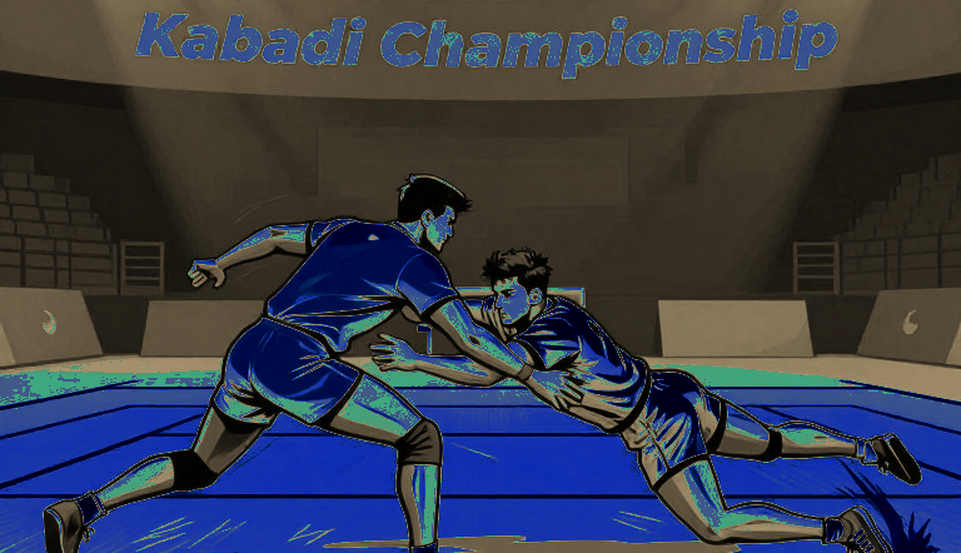
The second point nobody is making: the word Commonwealth is this event's structural ceiling, not its marketing label. Kabaddi's global order is India, then Iran, then everyone else. Iran is not a Commonwealth nation. So this championship, by construction, excludes the only team capable of beating India. That is a design flaw more than a scheduling accident.
The third point is uncomfortable for India. India's double gold is a structural outcome more than an achievement. The risk is not losing — it is going untested. Without Iran and Chinese Taipei, India will not meet a single match in October that applies real pressure. And the PKL's traditional October–December broadcast window collides with these dates, so there is no guarantee India's first-choice side is even on the plane.
Now the part where I cut against myself. My whole argument rests on the assumption that Pakistan withdrew for competitive reasons. But late national-team withdrawals in kabaddi are more often administrative — clearances, visas, funding release. If that is the case, my portfolio-failure frame does not apply to this news at all, and I am selling an administrative delay as a cultural decline. Worth remembering too that Pakistan travelled to Ahmedabad for the 2026 Kabaddi World Cup — venue-specific hostility is a weak explanation, so something else has changed.
My falsifier is explicit: if the sanctioning body turns out to be tied to the International Kabaddi Federation and Pakistan had already announced a full squad before pulling out, my competitive-decline claim weakens considerably. If no squad was ever named, my frame strengthens. And if this event turns out to be Circle Style, this entire piece gets rewritten.
So over the next few weeks I will be watching three things: the name of the sanctioning body, whether India's squad list contains its PKL stars, and whether this event ever returns for a second edition. My expectation: a thirteen-team tournament that reads international on paper and domestic on the mat. The argument was never about fourteen versus thirteen. It is about who gets to do the counting.